 Admin
Admin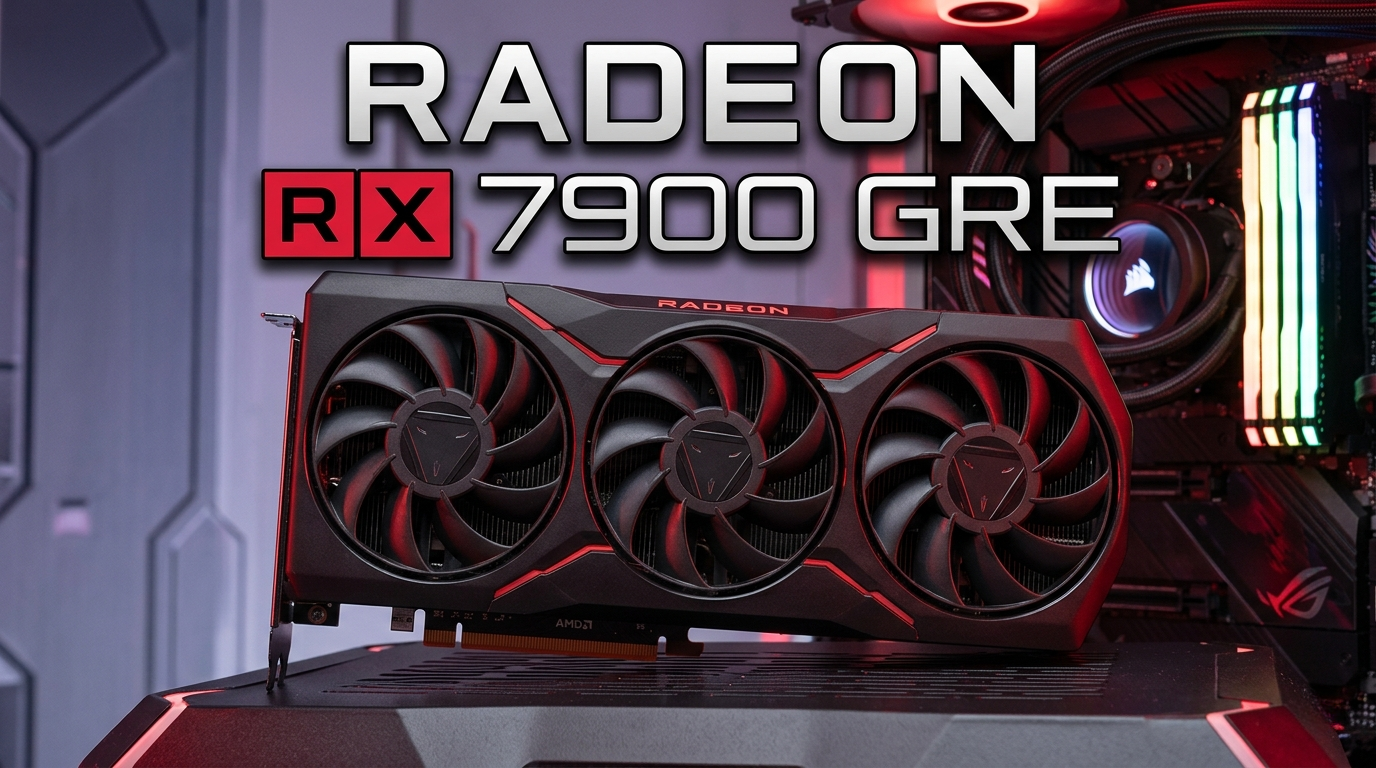
The 7900 GRE is a powerful graphics card from AMD’s Radeon RX 7000 series, designed for gamers who want strong performance without paying flagship-level prices. The name GRE stands for Golden Rabbit Edition, as the card was initially launched in China before becoming available in other regions due to growing demand. Built on AMD’s advanced RDNA 3 architecture, the 7900 GRE includes 16GB of GDDR6 memory, a 256-bit memory interface, and support for modern gaming technologies that improve visual quality and frame rates. These specifications make it suitable for demanding games, content creation tasks, and high-resolution gaming experiences.
The popularity of the 7900 GRE comes from its ability to deliver excellent value in the competitive graphics card market. It sits between the Radeon RX 7800 XT and RX 7900 XT, offering performance that appeals to gamers targeting 1440p and even 4K gaming. Many users consider it a balanced option because it combines a large amount of VRAM with strong rasterization performance and modern display support. As newer games continue to demand more graphical power and memory, the 7900 GRE has become a compelling choice for gamers seeking a future-ready GPU that can handle today’s most demanding titles while remaining relevant for years to come.
7900 GRE Specifications Overview
The 7900 GRE is based on AMD’s RDNA 3 graphics architecture, which focuses on delivering higher performance and better efficiency than previous Radeon generations. The card features 5,120 stream processors and 16GB of GDDR6 memory connected through a 256-bit memory bus, giving it enough bandwidth to handle modern games at high settings. The large VRAM capacity is particularly important because many recent AAA games use more memory than older titles, especially when running high-resolution textures and advanced graphical effects. This hardware configuration allows the 7900 GRE to maintain strong performance in demanding gaming scenarios while also supporting content creation and productivity workloads.
Another important aspect of the 7900 GRE is its modern connectivity and feature support. The card includes DisplayPort 2.1 and HDMI 2.1 outputs, making it compatible with high-refresh-rate monitors and advanced display technologies. AMD also equips the GPU with support for ray tracing and FidelityFX Super Resolution (FSR), which helps improve visual quality and frame rates in supported games. With a typical board power of around 260 watts, the card offers a balance between performance and power consumption, making it suitable for a wide range of gaming PC builds. These specifications position the 7900 GRE as a strong contender in the upper mid-range graphics card market, appealing to gamers who want premium features without stepping up to more expensive flagship models.
Gaming Performance at 1440p
The 7900 GRE is widely regarded as an excellent graphics card for 1440p gaming, which is considered the sweet spot for many PC gamers. At this resolution, the card can run most modern AAA titles at high or ultra settings while maintaining smooth frame rates. Games such as Cyberpunk 2077, Call of Duty, Forza Horizon 5, and Baldur’s Gate 3 benefit from the card’s powerful RDNA 3 architecture and 16GB of VRAM, allowing players to enjoy detailed graphics without sacrificing performance. In many gaming benchmarks, the 7900 GRE consistently delivers well above 60 frames per second and often exceeds 100 FPS in optimized titles, making it ideal for high-refresh-rate gaming monitors.
One of the reasons the 7900 GRE performs so well at 1440p is its strong rasterization capabilities. While some competing graphics cards focus heavily on ray tracing performance, AMD’s card excels in traditional gaming workloads where most players spend their time. The generous memory capacity also helps prevent performance issues in newer games that demand more VRAM, particularly when high-resolution textures are enabled. For gamers upgrading from older GPUs, the 7900 GRE offers a noticeable improvement in both image quality and frame rates, making it one of the most attractive options for anyone building a powerful 1440p gaming system.
4K Gaming Benchmarks and Results
The 7900 GRE is not only a strong 1440p graphics card but also a capable option for 4K gaming. Thanks to its 16GB of GDDR6 memory and powerful RDNA 3 architecture, the card can handle many modern games at 4K resolution with high graphical settings. In popular titles such as Assassin’s Creed Mirage, Resident Evil 4, Starfield, and Forza Horizon 5, the GPU often delivers smooth gameplay while maintaining impressive visual quality. Although performance varies depending on the game and settings used, many players can achieve frame rates above 60 FPS by adjusting a few demanding graphical options.
Compared to premium flagship GPUs, the 7900 GRE may not always lead benchmark charts at 4K, but it offers a strong balance between cost and performance. The card benefits from AMD FidelityFX Super Resolution (FSR), which can increase frame rates while preserving image quality, making demanding games more enjoyable at higher resolutions. Its large VRAM capacity also provides an advantage in 4K gaming, where texture quality and memory usage are significantly higher than at 1440p. For gamers seeking an affordable entry into 4K gaming without spending on top-tier graphics cards, the 7900 GRE delivers a performance level that exceeds expectations for its price category.
Ray Tracing and Upscaling Technologies
The 7900 GRE supports hardware-accelerated ray tracing, allowing games to produce more realistic lighting, reflections, shadows, and visual effects. Ray tracing can significantly improve a game’s appearance by simulating how light behaves in real-world environments. While AMD has continued to improve its ray-tracing performance with the RDNA 3 architecture, the 7900 GRE generally performs best in traditional rasterized gaming workloads. In games that rely heavily on ray tracing, users may need to lower certain settings to maintain smooth frame rates, especially at higher resolutions.
To help offset the performance impact of advanced graphics features, AMD provides support for FidelityFX Super Resolution (FSR). This upscaling technology renders games at a lower internal resolution and then intelligently enhances the image to improve performance while preserving visual quality. FSR can deliver substantial frame-rate improvements in supported titles, making it especially useful for 1440p and 4K gaming. When combined with the card’s powerful hardware and 16GB of VRAM, these technologies help the 7900 GRE provide a balanced gaming experience that offers both strong performance and impressive visual fidelity across a wide range of modern games.
Power Consumption and Cooling Performance
The 7900 GRE offers a solid balance between performance and power efficiency, making it suitable for a wide range of gaming PC builds. AMD rates the card at approximately 260 watts of total board power, which is reasonable considering the level of gaming performance it delivers. Most users can pair the GPU with a quality 700W to 750W power supply for stable operation. Compared to some higher-end graphics cards that consume significantly more power, the 7900 GRE provides competitive gaming results while keeping energy requirements relatively manageable.
Cooling performance is another area where the 7900 GRE performs well. Most models from board partners feature dual-fan or triple-fan cooling solutions designed to maintain safe operating temperatures during long gaming sessions. Under heavy gaming loads, the card typically remains within comfortable temperature ranges while keeping noise levels under control. This combination of efficient cooling and moderate power consumption makes the 7900 GRE a practical choice for gamers who want strong performance without excessive heat or power demands.
Power and Cooling Specifications
| Feature | Radeon RX 7900 GRE |
|---|---|
| Architecture | RDNA 3 |
| Total Board Power (TBP) | 260W |
| Recommended PSU | 700W–750W |
| Power Connectors | 2 × 8-pin |
| Cooling Options | Dual-fan or Triple-fan |
| Typical Gaming Temperature | Varies by model and airflow |
| Display Outputs | DisplayPort 2.1, HDMI 2.1 |
| Suitable For | 1440p and 4K Gaming |
| Efficiency Level | Strong Performance per Watt |
| Noise Levels | Generally Moderate Under Load |
7900 GRE Price and Value Comparison
The 7900 GRE has gained attention largely because of its strong value proposition. It delivers performance that sits comfortably between the Radeon RX 7800 XT and RX 7900 XT while often costing significantly less than high-end flagship graphics cards. This pricing position makes it attractive to gamers who want premium gaming performance without stretching their budget. With 16GB of VRAM and excellent 1440p capabilities, the card offers features that many users typically expect from more expensive GPUs, helping it stand out in a competitive market.
When comparing price-to-performance ratios, the 7900 GRE often proves to be one of the most balanced options in AMD’s lineup. It provides enough power for demanding modern games, supports advanced technologies such as ray tracing and FSR, and includes a generous amount of memory for future gaming requirements. For players deciding between several upper mid-range graphics cards, the 7900 GRE frequently emerges as a smart choice because it combines strong gaming benchmarks, modern features, and long-term value. This balance makes it appealing to both new PC builders and gamers looking to upgrade from older hardware.
Price and Performance Comparison
| Graphics Card | VRAM | Gaming Focus | Relative Performance | Value Rating |
|---|---|---|---|---|
| RX 7800 XT | 16GB | 1440p Gaming | Strong | Very Good |
| RX 7900 GRE | 16GB | 1440p & 4K Gaming | Very Strong | Excellent |
| RX 7900 XT | 20GB | High-End 4K Gaming | Higher | Good |
| RTX 4070 Super | 12GB | 1440p Gaming | Similar | Good |
| RTX 4070 Ti Super | 16GB | 1440p & 4K Gaming | Higher | Good |
Who Should Buy the 7900 GRE?
The 7900 GRE is best suited for gamers who want high performance without moving into the expensive flagship GPU category. It is an ideal choice for users building or upgrading a gaming PC focused on 1440p ultra settings, where it delivers smooth frame rates across most modern AAA titles. Gamers who prefer high-refresh-rate monitors will especially benefit from its ability to push well above 100 FPS in many competitive and optimized games. Its 16GB VRAM also ensures it can handle future game releases that demand more memory, making it a practical long-term investment.
This GPU is also a strong fit for users who occasionally play at 4K resolution but are willing to adjust some settings for smoother performance. Content creators who work with light to moderate video editing, streaming, or 3D workloads can also benefit from its strong compute power. However, users who prioritize heavy ray tracing performance at all times or want absolute top-tier 4K gaming without compromises may consider higher-end alternatives. Overall, the 7900 GRE is designed for balanced users who want strong performance, modern features, and good value in a single package.
Conclusion
The 7900 GRE stands out as one of the most balanced graphics cards in AMD’s lineup, offering a strong mix of performance, efficiency, and modern features. It delivers excellent results in 1440p gaming, handles 4K gaming with adjusted settings, and provides enough VRAM and power to stay relevant for future game releases. With its RDNA 3 architecture, 16GB memory, and support for technologies like FSR and ray tracing, it successfully bridges the gap between mid-range and high-end GPUs.
Overall, the 7900 GRE is a smart choice for gamers who want high performance without paying flagship prices. It competes strongly in its segment and offers one of the best value propositions in AMD’s current GPU lineup, making it a reliable option for both new PC builds and upgrades.
FAQs
What is the 7900 GRE used for?
It is mainly used for high-performance gaming at 1440p and 4K resolutions, as well as light content creation tasks.
Is the 7900 GRE good for 4K gaming?
Yes, it can run many games at 4K with high settings, though some titles may require adjustments for smoother performance.
How much VRAM does the 7900 GRE have?
It comes with 16GB of GDDR6 VRAM, which helps in modern and future gaming workloads.
Is the 7900 GRE better than the 7800 XT?
Yes, it generally offers slightly better performance and sits above the 7800 XT in AMD’s GPU hierarchy.
Visit for More information : Multiple Magazines