 Admin
Admin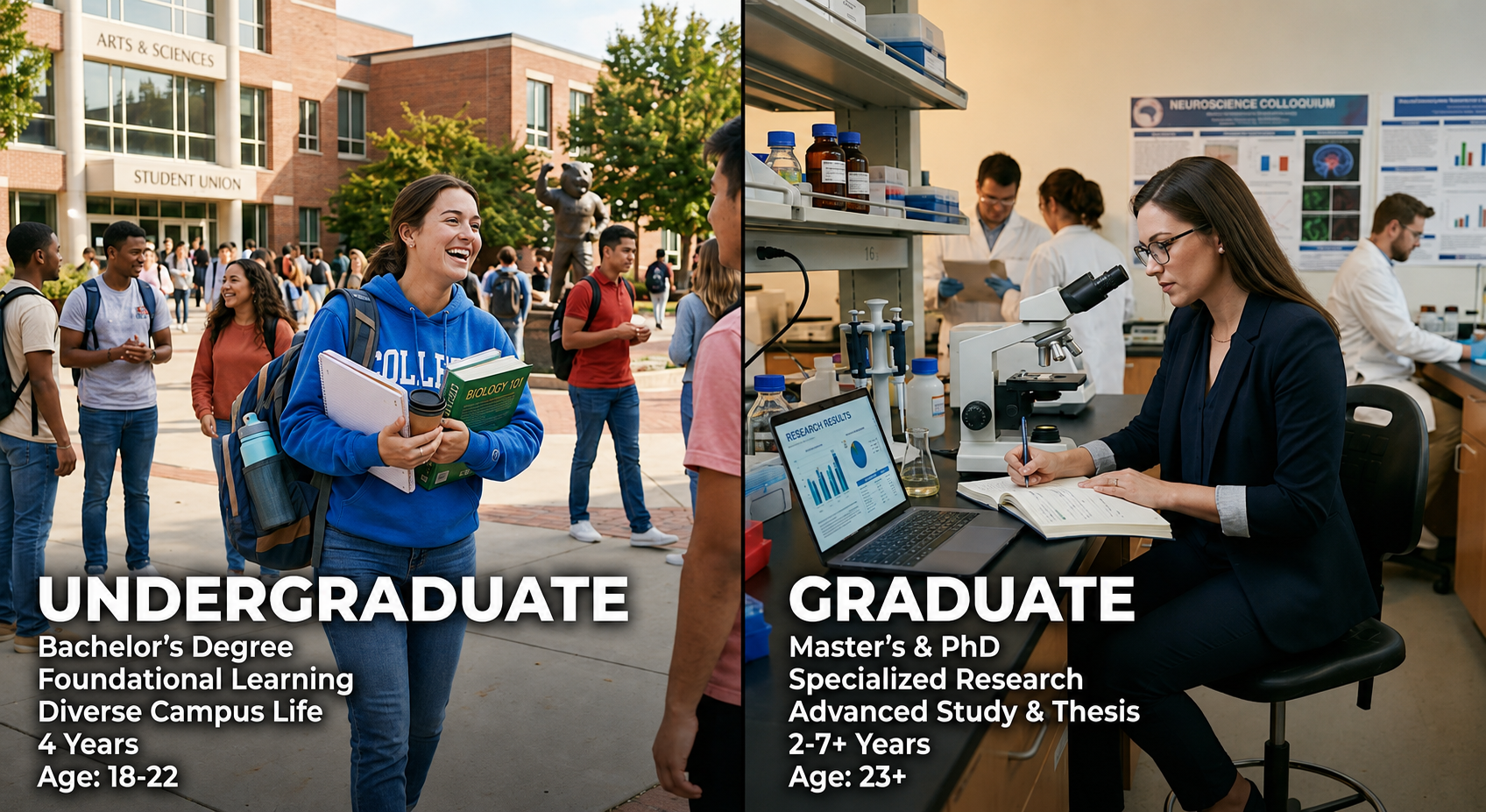
When discussing graduate vs undergraduate education, it is important to start with undergraduate studies because they represent the first stage of higher education for most students. An undergraduate degree is pursued after completing high school and is designed to provide students with foundational knowledge, practical skills, and a broad understanding of their chosen field. The most common undergraduate qualifications include associate and bachelor’s degrees, with bachelor’s programs typically lasting three to four years depending on the country and institution. During this stage, students take a combination of general education courses and subject-specific classes that help them build critical thinking, communication, and problem-solving abilities. Undergraduate education serves as the academic foundation for future employment and can also act as a stepping stone toward advanced graduate studies for those who wish to continue their education.
Understanding Graduate Degrees
A graduate degree represents an advanced academic qualification that students pursue after they complete a bachelor’s degree. Unlike undergraduate programs, which provide broad knowledge across a field, graduate programs focus on specialized learning, advanced research, and professional development. Students commonly pursue master’s degrees, doctoral degrees (PhDs), and professional qualifications in fields such as law, medicine, business, and education. These programs help individuals deepen their expertise, develop advanced skills, and qualify for higher-level positions in their chosen careers. Graduate students often work closely with professors, take part in research projects, and engage in more independent learning than undergraduate students.
Graduate education requires a higher level of commitment, analytical thinking, and subject mastery. Coursework becomes more rigorous and focuses on specific topics within a discipline, allowing students to develop into specialists rather than general learners. In many programs, students complete research papers, theses, dissertations, internships, or capstone projects that demonstrate their ability to apply advanced concepts in real-world situations. This specialized training links graduate degrees with stronger career opportunities, leadership roles, and higher earning potential, making them a valuable choice for individuals who aim for long-term professional growth.
Graduate vs Undergraduate: Major Differences at a Glance
The comparison of graduate vs undergraduate education becomes clearer when students examine their key differences side by side. Undergraduate programs introduce students to a field of study and build a strong academic foundation through a mix of general and specialized courses. Graduate programs, however, serve students who have already completed an undergraduate degree and want to develop deeper expertise in a specific area. Undergraduate students usually follow a structured curriculum with guidance from instructors, while graduate students enjoy greater academic independence. They also conduct research, analyze complex topics, and contribute original ideas within their discipline.
Another significant difference lies in the level of specialization, admission requirements, and career outcomes. Undergraduate admission generally requires a high school diploma or equivalent qualification, while graduate programs require a completed bachelor’s degree and may also request recommendation letters, entrance exam scores, or relevant work experience. Graduate studies typically involve smaller class sizes, closer interaction with faculty members, and more advanced coursework. In terms of career impact, undergraduate degrees often prepare students for entry-level positions, while graduate degrees can open doors to specialized professions, management roles, research careers, and higher salary potential. These distinctions make it important for students to evaluate their academic goals and professional aspirations before deciding which educational path best suits their needs.
Admission Requirements for Graduate and Undergraduate Programs
The admission process is one of the most noticeable differences in the graduate vs undergraduate comparison. Undergraduate programs typically welcome students who have completed high school or an equivalent qualification. Universities often evaluate applicants based on their academic transcripts, grades, extracurricular activities, personal statements, and, in some cases, standardized test scores. The primary goal of undergraduate admissions is to assess whether students possess the academic preparation and potential needed to succeed in higher education. Because these programs serve as the first step into university life, the requirements are generally more accessible and focus on overall academic performance rather than specialized expertise.
Graduate admissions are usually more selective because applicants are expected to have already completed a bachelor’s degree in a related field. In addition to undergraduate transcripts, universities may require letters of recommendation, a statement of purpose, a resume or curriculum vitae, research proposals, and sometimes standardized test scores such as the GRE or GMAT, depending on the program. Certain graduate programs also value professional work experience, particularly in fields like business, healthcare, and public administration. Since graduate studies involve advanced learning and independent research, admissions committees carefully evaluate an applicant’s academic background, career objectives, and ability to handle rigorous coursework before granting admission.
Coursework, Learning Style, and Academic Expectations
Another important aspect of the graduate vs undergraduate comparison is the difference in coursework and learning expectations. Undergraduate programs typically provide a balanced curriculum that combines general education requirements with major-specific courses. Students learn fundamental concepts, explore different academic disciplines, and develop essential skills such as communication, critical thinking, and problem-solving. Classes often include lectures, group projects, quizzes, and exams, with instructors providing structured guidance throughout the learning process. This approach helps students build a strong academic foundation while gradually preparing them for more advanced study or professional careers.
Graduate programs, in contrast, place a greater emphasis on specialization, independent learning, and advanced analysis. Students are expected to engage deeply with complex topics, conduct research, and contribute original insights within their field of study. Coursework may involve intensive seminars, research projects, case studies, presentations, and thesis or dissertation work. Graduate students generally have more responsibility for managing their own learning and are encouraged to work closely with faculty mentors on specialized academic or professional projects. As a result, the academic expectations at the graduate level are significantly higher, requiring strong self-discipline, analytical skills, and a commitment to mastering a particular area of expertise.
Career Opportunities and Salary Potential
One of the main reasons students compare graduate vs undergraduate programs is to understand how each level of education can influence career opportunities and earning potential. An undergraduate degree can open the door to a wide range of entry-level positions across industries such as business, education, healthcare, technology, and marketing. Employers often view a bachelor’s degree as evidence that a candidate possesses essential knowledge, critical thinking skills, and the ability to complete complex tasks. For many professions, an undergraduate degree provides sufficient qualifications to begin building a successful career and gaining valuable workplace experience.
A graduate degree, however, can help professionals advance beyond entry-level roles and qualify for specialized or leadership positions. Many industries reward advanced education with increased responsibilities, greater authority, and higher salaries. Graduate degree holders may pursue careers in research, academia, senior management, consulting, engineering, healthcare, and other specialized fields that require advanced expertise. While earning a graduate degree often requires additional time and financial investment, it can provide long-term benefits through expanded career options, professional recognition, and stronger earning potential. The value of a graduate degree ultimately depends on an individual’s career goals, industry requirements, and commitment to continued learning.
How to Choose Between Graduate and Undergraduate Studies
Choosing between different stages of graduate vs undergraduate education depends largely on your academic goals, career plans, and personal interests. If you are just finishing high school or starting your higher education journey, an undergraduate degree is the essential first step. It allows you to explore different subjects, discover your strengths, and build a strong academic foundation before committing to a specific career path. Students who are unsure about their long-term goals often benefit from undergraduate studies because they provide flexibility and exposure to multiple fields.
On the other hand, if you have already completed a bachelor’s degree and want to specialize further or improve your career prospects, a graduate program may be the right choice. Graduate studies are best suited for individuals who are focused on advanced knowledge, research, or leadership roles in their profession. When making this decision, it is important to consider factors such as cost, time commitment, job market demand, and personal motivation. A clear understanding of your long-term objectives will help you decide whether continuing to a graduate program or focusing on career development after an undergraduate degree is the best path for you.
Conclusion
In summary, the discussion of graduate vs undergraduate education highlights two distinct but connected stages of academic development. Undergraduate studies focus on building a broad foundation of knowledge, introducing students to their chosen field, and preparing them for entry-level careers or further education. Graduate studies, on the other hand, are more advanced and specialized, designed for students who want to deepen their expertise, conduct research, or move into leadership and high-level professional roles. Both pathways play an important role in shaping a student’s academic journey and career success.
Ultimately, the choice between undergraduate and graduate education depends on individual goals, interests, and career aspirations. While an undergraduate degree opens the door to many opportunities, a graduate degree can further enhance skills and increase long-term earning potential. Understanding these differences helps students make informed decisions that align with their future ambitions and professional growth. Carefully evaluating both options ensures a clearer, more confident academic path forward.
FAQs
What is the main difference between graduate and undergraduate?
The main difference is that undergraduate programs are the first level of university education after high school, while graduate programs are advanced studies pursued after completing a bachelor’s degree.
Which is higher, undergraduate or graduate?
Graduate education is higher than undergraduate education because it involves advanced study, specialization, and often research-based learning.
Can I do a graduate degree without an undergraduate degree?
No, in most cases you must complete an undergraduate (bachelor’s) degree before applying for a graduate program.
Is a graduate degree better for jobs?
A graduate degree can improve job opportunities and salary potential in many fields, but it depends on the industry and career goals.
Visit for More information : Multiple Magazines