
 Admin
Admin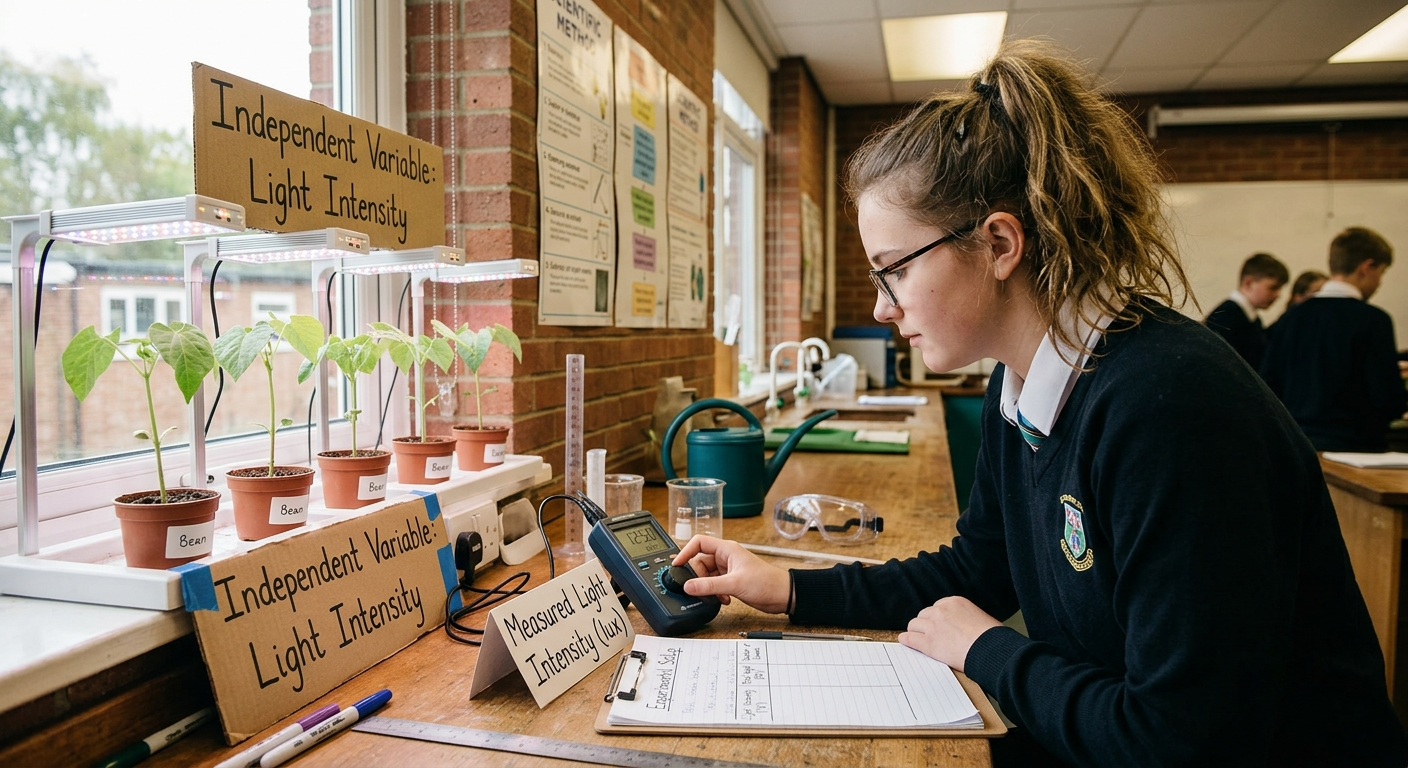
The concept of independent variable science forms the foundation of scientific experiments and research. Scientists use an independent variable to test how one factor influences another under controlled conditions. In simple terms, the independent variable is the factor that researchers intentionally change or manipulate during an experiment to observe its effect on the dependent variable. This concept appears in nearly every branch of science, including biology, chemistry, physics, environmental science, and psychology. For example, when researchers study how different amounts of sunlight affect plant growth, the amount of sunlight becomes the independent variable because it is the factor being changed. Understanding independent variable science helps students, researchers, and educators analyze experiments correctly, identify cause-and-effect relationships, and draw reliable conclusions. Since scientific investigations rely on controlled testing and accurate measurements, the independent variable serves as a critical element that guides the entire experimental process and helps researchers produce meaningful and trustworthy results.
Understanding Independent and Dependent Variables
Understanding the relationship between independent and dependent variables is essential in scientific experiments because both variables work together to produce measurable results. The independent variable is the factor that researchers intentionally change, while the dependent variable is the factor that responds to that change and is measured during the experiment. For example, if a scientist wants to determine whether different amounts of water affect plant growth, the amount of water serves as the independent variable, while the height of the plant becomes the dependent variable. The dependent variable changes because of the adjustments made to the independent variable. This cause-and-effect relationship allows researchers to identify patterns, test hypotheses, and reach accurate conclusions. By clearly distinguishing between these two variables, scientists can design better experiments, reduce errors, and ensure that their findings remain reliable and scientifically valid.
| Variable Type | Definition | Example |
|---|---|---|
| Independent Variable | The factor that is changed or controlled | Amount of sunlight |
| Dependent Variable | The factor that is measured or observed | Plant growth |
| Controlled Variables | Factors kept constant during the experiment | Soil, water, temperature |
Why Independent Variables Matter in Scientific Experiments
The role of the independent variable extends far beyond simply changing one factor in an experiment. It serves as the foundation for testing hypotheses and establishing cause-and-effect relationships in science. Researchers depend on independent variables to determine whether a specific change produces a measurable outcome. Without a clearly defined independent variable, experiments would become difficult to control, and scientists would struggle to identify which factor caused the observed results. By changing only one independent variable at a time while keeping other conditions constant, researchers can collect accurate data and minimize errors. This approach improves the reliability of experimental findings and allows scientists to repeat experiments under similar conditions.
The importance of independent variable science can be seen in nearly every scientific field. Medical researchers test new medications by changing drug doses, environmental scientists study pollution levels by adjusting environmental factors, and agricultural experts examine crop growth by changing fertilizers or irrigation methods. In educational settings, students learn to identify independent variables because this skill helps them understand the scientific method and analyze experiments correctly. A well-chosen independent variable enables scientists to make evidence-based conclusions, develop new technologies, and solve real-world problems through systematic investigation.
Real-Life Examples of Independent Variables
Real-life examples make independent variable science easier to understand because they show how scientists apply this concept in everyday experiments and research studies. In a plant growth experiment, the amount of sunlight given to each plant acts as the independent variable, while the growth of the plant is measured as the dependent variable. In a classroom experiment, a teacher may change the amount of study time to determine its effect on students’ test scores. Similarly, a nutrition researcher might adjust the amount of daily exercise to observe changes in body weight. In each case, the independent variable is the factor that researchers deliberately change to measure its impact on another outcome.
Independent variables also play an important role in professional scientific research and industry. Pharmaceutical companies test different medication doses to determine their effectiveness, while environmental scientists examine how temperature changes affect ecosystems. Agricultural researchers compare various fertilizers to identify which one improves crop production the most. These practical examples demonstrate that independent variables help scientists collect accurate data, make informed decisions, and solve real-world problems. Understanding these examples allows students and researchers to recognize independent variables more easily and apply scientific thinking to everyday situations.
Independent Variables in Different Fields of Science
The concept of independent variable science applies to many branches of science, and each field uses independent variables to answer specific research questions. In biology, scientists may change the amount of light, water, or nutrients to study their effects on living organisms. In chemistry, researchers often alter temperature, concentration, or reaction time to observe changes in chemical reactions. Physics experiments may involve changing force, speed, or distance to understand motion and energy. These controlled changes help scientists collect accurate data and determine how one factor influences another under specific conditions.
Independent variables also play an important role in environmental science, psychology, and medical research. Environmental scientists may study how pollution levels affect ecosystems by adjusting exposure to certain pollutants. Psychologists often change study conditions, such as sleep duration or learning methods, to examine human behavior and performance. In medical research, scientists test different medication doses or treatment methods to evaluate patient outcomes. Because every scientific field relies on experimentation and observation, independent variables remain essential tools for developing new knowledge, improving existing theories, and solving practical problems through evidence-based research.
Common Mistakes Students Make When Identifying Independent Variables
Many students struggle to identify the independent variable because they often confuse it with the dependent variable. One of the most common mistakes is assuming that the measured result is the independent variable when, in reality, it is usually the dependent variable. For example, in an experiment that examines how sunlight affects plant growth, some students incorrectly identify plant growth as the independent variable. The correct answer is the amount of sunlight because it is the factor being changed by the researcher. Another frequent mistake is selecting controlled variables, such as temperature or soil type, as the independent variable even though these factors remain constant throughout the experiment.
Students also make errors when experiments contain several changing factors at the same time. Changing multiple variables can make it difficult to determine which factor caused the observed results. Scientists generally change only one independent variable while keeping all other conditions constant to ensure accurate findings. Reading the experiment carefully and asking, “What factor is the researcher intentionally changing?” can help students identify the correct independent variable. Developing this skill improves scientific understanding, reduces mistakes in experiments, and helps students analyze research more effectively.
How to Identify an Independent Variable
Identifying the independent variable becomes easier when you focus on the factor that the researcher intentionally changes during an experiment. The independent variable is always the cause or the condition being tested, while the dependent variable is the result that is measured. A simple question can help: “What factor is being changed?” For example, if a scientist wants to study how different temperatures affect ice melting, the temperature is the independent variable because the researcher controls and changes it. The melting time becomes the dependent variable because it changes in response to temperature. Recognizing this relationship helps students understand experiments more accurately and avoid confusion between different types of variables.
Several steps can help identify the independent variable in any experiment. First, read the research question carefully and determine what the scientist wants to test. Second, identify the factor that changes during the experiment while other conditions remain constant. Third, look for the variable placed on the horizontal axis of graphs because the independent variable often appears there. Practicing these steps with real examples improves scientific thinking and makes experimental analysis easier. As students gain experience, they become more confident in identifying variables and understanding how scientific investigations work.
Best Practices for Designing Experiments
Designing a successful experiment requires careful planning, and the independent variable plays a central role in the process. Scientists usually change only one independent variable at a time so they can clearly observe its effect on the dependent variable. Keeping other factors constant, known as controlled variables, helps reduce errors and improves the accuracy of the results. Researchers also create a clear hypothesis before beginning the experiment, collect data systematically, and repeat trials to ensure the findings are reliable. These practices allow scientists to identify cause-and-effect relationships and draw valid conclusions from their investigations.
Following good experimental practices benefits both students and professional researchers. Recording observations accurately, using consistent measurement methods, and analyzing results objectively help prevent bias and improve the quality of the study. Scientists often use tables, graphs, and statistical analysis to organize their findings and identify patterns. By carefully selecting and controlling the independent variable, researchers can conduct experiments that produce dependable results and contribute valuable knowledge to science. Strong experimental design not only improves research accuracy but also helps solve real-world problems through evidence-based investigation.
Conclusion
Understanding independent variable science is essential for anyone studying or conducting scientific experiments. The independent variable is the factor that researchers intentionally change to observe its effect on another variable. From classroom activities to professional research, independent variables help scientists establish cause-and-effect relationships and produce reliable results. Learning how to identify and control these variables improves experimental accuracy and strengthens scientific thinking.
The importance of independent variables extends across biology, chemistry, physics, environmental science, and medical research. By changing one factor at a time and keeping other conditions constant, researchers can collect dependable data and make evidence-based conclusions. Whether students are completing school projects or scientists are conducting advanced studies, understanding independent variable science remains a fundamental skill that supports successful experimentation and scientific discovery.
FAQs
What is an independent variable in science?
An independent variable is the factor that a researcher changes or controls during an experiment.
What is the difference between independent and dependent variables?
The independent variable is the factor being changed, while the dependent variable is the result being measured.
Why is the independent variable important?
It helps scientists determine cause-and-effect relationships and conduct accurate experiments.
Can an experiment have more than one independent variable?
Yes, some advanced experiments may use multiple independent variables, but most basic experiments test only one at a time.
Visit for More information : Multiple Magazines