 Admin
Admin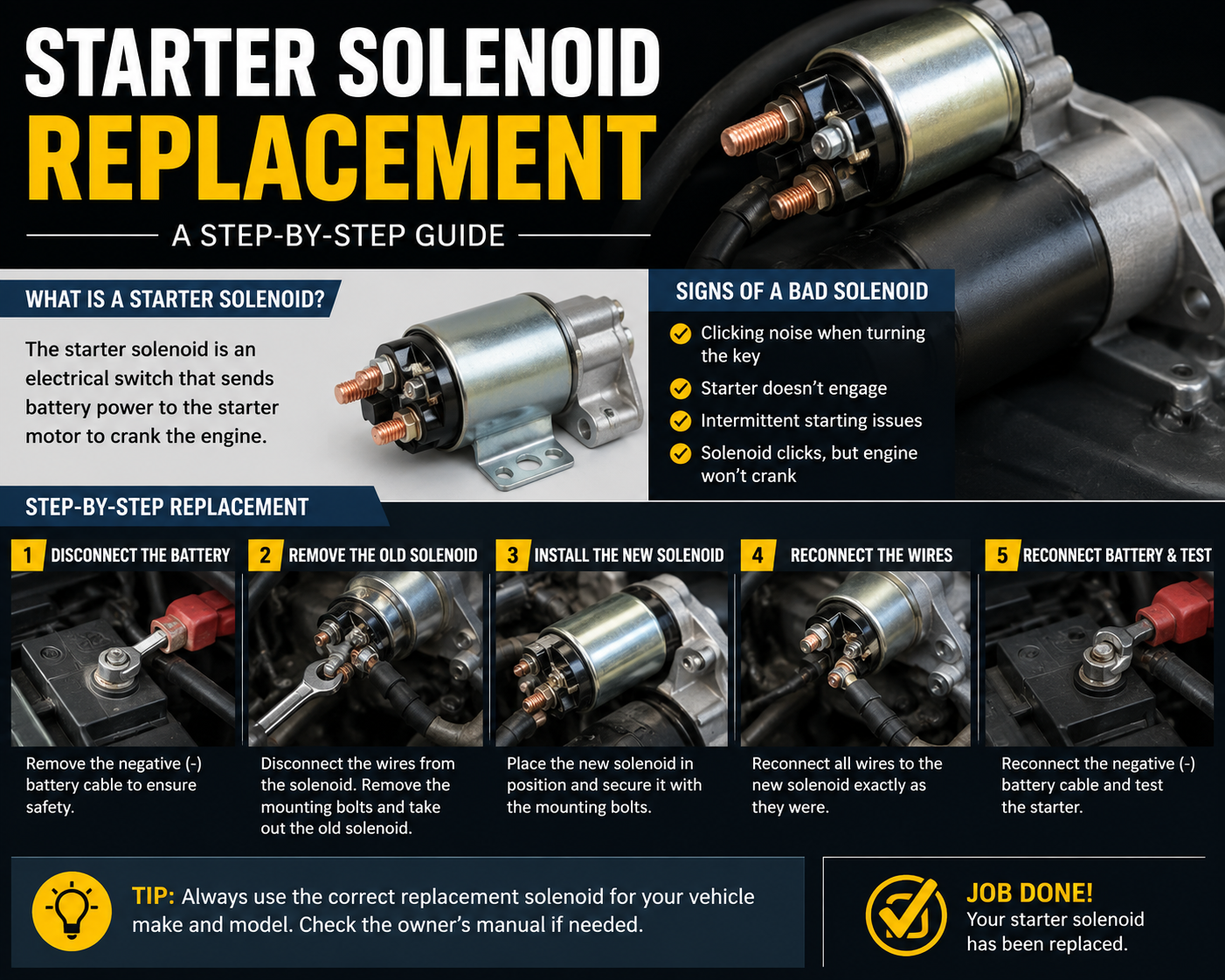
The starter solenoid is a small but essential electrical component that controls the flow of power from the battery to the starter motor whenever you turn the ignition key or press the start button. It acts as a high-current switch that engages the starter motor and cranks the engine. Many modern vehicles mount the solenoid directly on the starter motor, while older vehicles use a separate remote-mounted unit. Because the solenoid manages the connection between the battery and the starter system, a faulty unit can prevent the engine from starting, create clicking noises, or cause intermittent starting problems. Understanding its function helps vehicle owners recognize the need for starter solenoid replacement before a complete starting failure occurs.
Common Signs of a Bad Starter Solenoid
One of the most common indicators of a failing starter solenoid is a clicking sound when you turn the ignition key. The vehicle may produce a single click or a series of rapid clicks without cranking the engine. Drivers may also experience intermittent starting problems where the car starts normally one day but refuses to start the next. In some cases, the starter motor keeps running after the engine starts, while other vehicles show no response at all even with a fully charged battery. These warning signs often point to electrical issues inside the solenoid, damaged internal contacts, or poor power transfer to the starter motor, making starter solenoid replacement necessary to restore reliable engine starting.
Main Causes of Starter Solenoid Failure
Several factors can cause a starter solenoid to fail over time, with age and normal wear being among the most common reasons. Every time the engine starts, electrical contacts inside the solenoid engage and disconnect, gradually causing the internal components to wear out. Excessive heat from the engine bay can also damage the solenoid’s wiring and insulation, while moisture and corrosion may affect electrical connections. Weak batteries, loose terminals, and repeated jump-starts can place additional stress on the solenoid and reduce its lifespan.
Environmental conditions and poor vehicle maintenance also contribute to solenoid problems. Dirt, oil leaks, and road debris can enter the starter assembly and interfere with proper operation. In some cases, voltage fluctuations caused by a failing alternator or damaged battery cables may cause the solenoid to overheat or stick. Understanding these causes helps drivers prevent unexpected failures and determine when starter solenoid replacement is the most effective solution.
How to Diagnose a Faulty Starter Solenoid
Diagnosing a faulty starter solenoid begins by observing the vehicle’s starting behavior. If the engine does not crank, produces a clicking sound, or starts inconsistently, the solenoid may be the source of the problem. Drivers should first check the battery voltage and inspect the battery terminals for corrosion or loose connections. A fully charged battery combined with starting issues often points toward a defective solenoid or starter assembly. Listening for unusual noises during ignition can also help identify internal electrical problems.
A more detailed inspection includes testing the voltage at the starter solenoid with a multimeter. If the solenoid receives power from the battery but does not send enough voltage to the starter motor, the component may be defective. Mechanics also inspect wiring connections, starter relays, and ignition circuits to rule out other electrical issues. Proper diagnosis prevents unnecessary repairs and confirms whether a starter solenoid replacement is required to restore normal vehicle operation.
Starter Solenoid Replacement: Step-by-Step Guide
The starter solenoid replacement process starts by disconnecting the negative battery terminal to prevent electrical accidents. After you safely park and support the vehicle if needed, locate the starter assembly and identify the solenoid. Disconnect the electrical wires connected to the solenoid and label them if needed to avoid confusion during reinstallation. Remove the mounting bolts that secure the solenoid or starter assembly, then carefully take out the faulty component from the vehicle.
Install the new solenoid by positioning it correctly and tightening the mounting bolts according to the manufacturer’s specifications. Reconnect all electrical connections and make sure the wiring stays secure and free from corrosion. Once everything is installed, reconnect the battery and start the engine to confirm proper operation. Following these steps carefully ensures a successful repair and restores reliable starting performance.
Starter Solenoid Replacement Costs Explained
The cost of starter solenoid replacement varies depending on the vehicle model, labor charges, and whether the solenoid comes separately or as part of the entire starter assembly. In many vehicles, replacement solenoids cost between $20 and $100, while complete starter units range from $100 to $400 or more. Luxury vehicles and certain imported models often carry higher parts prices because of their specialized components and limited availability.
Labor costs also contribute significantly to the total repair expense. Some vehicles allow easy access to the starter assembly, so technicians complete the repair within an hour, while others require removing additional components, which increases labor time and cost. Vehicle owners with mechanical experience can reduce expenses by performing the repair themselves, but professional installation ensures accurate diagnosis and reliable operation after replacement.
Should You Replace the Solenoid or the Entire Starter?
The decision to replace only the solenoid or the entire starter depends on the vehicle design and the condition of the starter motor. In some older vehicles, the starter solenoid can be removed separately, making it a more affordable repair option. If testing confirms that the starter motor still functions properly and only the solenoid has failed, replacing the individual component can save money and restore normal starting performance.
Many modern vehicles use integrated starter assemblies where the solenoid and starter motor are combined into a single unit. In these cases, replacing the complete starter is often recommended because both components experience similar wear over time. Installing a new starter assembly can improve long-term reliability, reduce the risk of future failures, and eliminate the need for additional repairs shortly after the initial replacement.
Maintenance Tips to Extend Starter Life
Regular vehicle maintenance can significantly increase the lifespan of the starter system and reduce the chances of unexpected failures. Keeping the battery fully charged, cleaning battery terminals, and inspecting electrical connections help ensure the starter solenoid receives proper voltage during every engine start. Drivers should also pay attention to slow cranking, clicking sounds, or intermittent starting issues, as early diagnosis can prevent additional damage to the starter motor and electrical system.
Avoiding repeated short trips, limiting excessive engine cranking, and repairing battery or charging system problems promptly can also protect the starter assembly. Periodically checking wiring connections for corrosion or looseness helps maintain efficient power delivery. By following these preventive measures, vehicle owners can improve starting reliability and reduce the likelihood of needing a starter solenoid replacement sooner than expected.
Conclusion
A starter solenoid replacement is an important repair that helps maintain reliable vehicle performance and prevents unexpected starting problems. Recognizing warning signs such as clicking noises, intermittent starting issues, or a complete no-start condition allows drivers to address the problem before it leads to more expensive repairs. Understanding the causes, diagnosis methods, replacement process, and associated costs helps vehicle owners make informed decisions about their repairs.
Regular maintenance of the battery, wiring, and starter system can extend component life and reduce the risk of failure. Whether replacing only the solenoid or the entire starter assembly, taking action at the right time ensures dependable engine starting and improves overall vehicle reliability.
FAQs
How long does a starter solenoid last?
Most starter solenoids can last between 80,000 and 150,000 miles, depending on driving conditions and maintenance.
Can I drive with a bad starter solenoid?
A faulty solenoid may cause the vehicle to fail to start unexpectedly, so repairs should be completed as soon as possible.
Is replacing a starter solenoid difficult?
The repair difficulty depends on the vehicle model. Some vehicles offer easy access, while others require removing additional components.
How much does a starter solenoid replacement cost?
Replacement costs generally range from $20 to $400 or more, depending on the vehicle and whether the entire starter assembly must be replaced.
Visit for More information : Multiple Magazines