
 Admin
Admin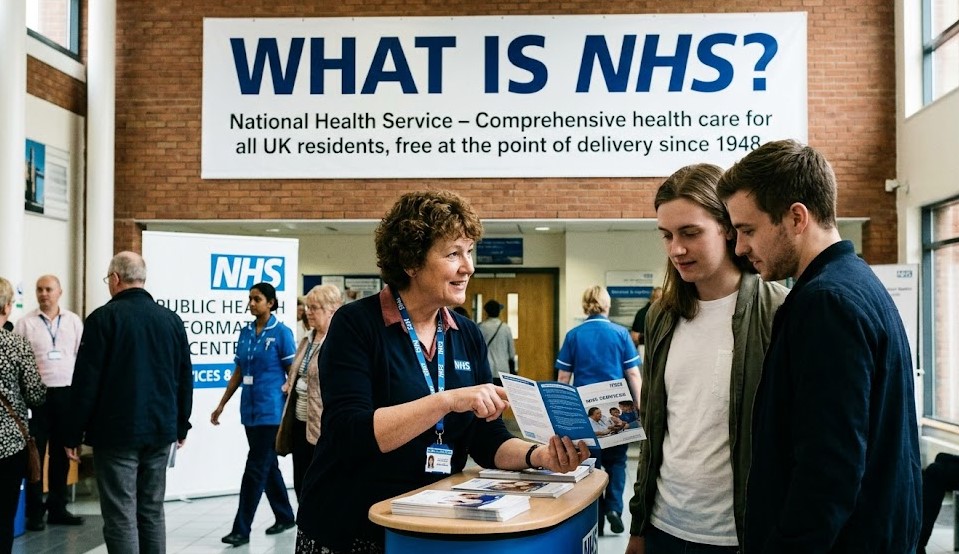
The question “what is NHS” refers to one of the most important public healthcare systems in the world, known as the National Health Service (NHS) in the United Kingdom. The NHS provides healthcare services that are mostly free at the point of use for people living in the UK, which means patients usually do not pay directly when they visit a doctor, go to a hospital, or receive emergency treatment. This system focuses on making healthcare accessible to everyone, regardless of income or social status.
The NHS was established in 1948 with the purpose of providing healthcare based on need rather than ability to pay. This principle makes it different from many other healthcare systems around the world. Instead of relying mainly on private insurance, the NHS is funded through taxes collected from the public. Over the years, it has grown into one of the largest healthcare systems globally, serving millions of people every day across England, Scotland, Wales, and Northern Ireland.
Today, the NHS includes a wide range of services such as general practitioner (GP) visits, hospital care, emergency treatment, mental health support, and preventive healthcare programs. It plays a vital role in daily life in the UK by ensuring that medical help remains available to everyone when they need it.
History and Formation of the NHS
The NHS began in 1948 after World War II, when the UK government recognized the need for a healthcare system that served everyone equally. Before its creation, many people could not afford medical treatment, and healthcare depended heavily on private payments or charitable services. The government introduced the NHS to solve this inequality and to ensure that all citizens could access medical care without financial barriers.
The idea of a national health service came from the post-war vision of rebuilding society on fairness and social welfare. The system officially launched on 5 July 1948, under the leadership of Health Minister Aneurin Bevan. At the time, the NHS brought together hospitals, doctors, nurses, and other healthcare providers under one publicly funded system. This transformation marked a major shift in how healthcare worked in the United Kingdom.
Over the decades, the NHS has expanded and adapted to new medical technologies, growing populations, and changing health needs. It has introduced advanced treatments, improved emergency services, and developed specialized care units. Despite challenges over time, the NHS remains a symbol of universal healthcare and continues to play a central role in British society.
Structure of the NHS in the UK
The NHS operates as a publicly funded healthcare system, but it does not function as a single centralized organization. Instead, it is divided into separate systems across the four nations of the United Kingdom: England, Scotland, Wales, and Northern Ireland. Each region manages its own healthcare services, policies, and administration while still following the shared principle of providing care based on need rather than ability to pay.
In England, NHS England oversees hospitals, GP practices, and specialist services, while local NHS trusts manage day-to-day operations. Scotland runs its own system called NHS Scotland, which focuses on delivering healthcare services through regional health boards. Wales operates through NHS Wales, and Northern Ireland manages healthcare through Health and Social Care services. This decentralized structure allows each region to adapt healthcare delivery based on local needs.
Despite regional differences, all parts of the NHS work together to provide consistent and accessible healthcare. Patients can usually receive treatment across different regions, and emergency services operate under shared standards. This structure ensures that the NHS remains flexible while maintaining a unified goal of delivering universal healthcare across the UK.
Services Provided by the NHS
The NHS provides a wide range of healthcare services that cover almost every aspect of medical care. When people ask “what is NHS”, one of the most important answers is the variety of services it offers, from basic health checks to advanced medical treatments. The system ensures that patients receive care at different stages of life, whether they need routine consultations or emergency support.
Primary care forms the first level of NHS services, mainly through general practitioners (GPs). These doctors handle common illnesses, provide health advice, and refer patients to specialists when necessary. Alongside GP services, the NHS also provides emergency care through Accident & Emergency (A&E) departments, where patients receive immediate treatment for serious conditions. Ambulance services also play a critical role in transporting patients quickly during emergencies.
In addition to basic and emergency care, the NHS offers hospital treatments, surgeries, maternity services, mental health support, and long-term care for chronic conditions. It also focuses heavily on preventive healthcare through vaccination programs, health screenings, and public health campaigns. This wide service network ensures that people receive continuous and comprehensive care throughout their lives.
How NHS Funding Works
The NHS is primarily funded through taxation, which means the public pays for healthcare indirectly through income tax, National Insurance contributions, and other government revenues. This funding model allows the NHS to provide most services free at the point of use, ensuring that patients do not receive a bill when they visit a doctor, go to hospital, or use emergency services.
Below is a simple table explaining how NHS funding is structured:
| Funding Source | Description |
|---|---|
| Income Tax | A portion of earnings from workers goes to the government to support public services, including the NHS. |
| National Insurance | Contributions from employees and employers help fund healthcare and social services. |
| Government Budget | General taxation is allocated annually to support NHS operations and infrastructure. |
| Prescription Charges | In some cases, patients pay a small fee for medicines (mainly in England). |
The government distributes this funding to different NHS bodies across the UK, including hospitals, GP services, and specialist care providers. Each region manages its own budget based on local healthcare needs. This system ensures that resources are allocated where they are needed most, while still maintaining the principle of universal healthcare access.
Eligibility and Access to NHS Services
Access to the NHS mainly depends on residency status in the United Kingdom. People who live in the UK and are considered “ordinarily resident” can generally use NHS services without paying directly at the time of treatment. This includes citizens, long-term residents, and individuals who meet specific immigration and residency conditions. The system ensures that healthcare remains accessible to those who contribute to the UK society through taxes and national insurance.
To access services, most patients first register with a General Practitioner (GP), who acts as the main point of contact for healthcare needs. The GP evaluates symptoms, provides treatment for common illnesses, and refers patients to specialists or hospitals when required. In emergency situations, anyone can access NHS emergency services, such as A&E departments or ambulance care, regardless of their background or nationality.
Some services may require additional charges or eligibility checks, especially for non-residents or visitors. However, essential and urgent care is generally available to everyone. This structure helps the NHS balance universal access with fair use of resources while ensuring that people receive medical attention when they need it most.
Advantages of the NHS System
The NHS offers several important advantages that make it one of the most respected healthcare systems in the world. One of the biggest strengths of the NHS is that it provides healthcare that is free at the point of use for most services. This means patients can receive medical attention without worrying about immediate costs, which removes financial barriers and ensures equal access for everyone.
Another major advantage is its focus on universal healthcare. The NHS treats patients based on medical need rather than income or social status. This creates a fair system where everyone, regardless of background, receives the same standard of care. It also promotes preventive healthcare through vaccinations, screenings, and public health campaigns, which helps reduce serious illnesses in the long term.
The NHS also benefits from a highly trained workforce and a wide network of hospitals, clinics, and emergency services across the UK. Patients can access care in both urban and rural areas, ensuring nationwide coverage. Overall, the system prioritizes equality, accessibility, and comprehensive care, making it a vital part of British society.
Challenges Facing the NHS Today
The NHS faces several challenges despite being one of the most advanced healthcare systems in the world. One of the biggest issues is rising demand for services. An aging population and an increase in chronic diseases place continuous pressure on hospitals, GPs, and emergency departments. This growing demand often leads to longer waiting times for appointments, treatments, and surgeries.
Another major challenge involves funding and resource limitations. Although the NHS receives significant government funding, healthcare costs continue to rise due to new technologies, expensive treatments, and increased patient needs. Staff shortages also create difficulties, as hospitals struggle to recruit and retain enough doctors, nurses, and support workers to meet demand.
In addition, operational pressures and system backlogs affect efficiency in some areas. Events such as public health crises can further strain the system. Despite these challenges, the NHS continues to adapt by introducing reforms, investing in digital healthcare, and improving service delivery to maintain quality care for patients across the UK.
Conclusion
The NHS represents one of the most important public healthcare systems in the world, designed to provide medical care based on need rather than financial status. When people ask “what is NHS”, they are referring to a system that ensures healthcare remains accessible, fair, and largely free at the point of use for residents of the United Kingdom. It delivers a wide range of services, including primary care, hospital treatment, emergency care, mental health support, and preventive health programs, all under a publicly funded structure.
Over time, the NHS has become a key part of British society by promoting equality in healthcare access. Despite facing challenges such as rising demand, funding pressures, and staff shortages, it continues to adapt and improve its services. Its commitment to universal healthcare makes it a model for many countries around the world.
FAQs
What is NHS in simple words?
The NHS is the UK’s public healthcare system that provides medical treatment mostly free at the point of use.
Who can use the NHS?
People who live in the UK and meet residency requirements can generally use NHS services.
Is the NHS free?
Most NHS services are free, but some things like prescriptions or dental care may have charges.
When was the NHS created?
The NHS was created in 1948 to provide healthcare for everyone based on need, not money.
Visit for More information : Multiple Magazines