
 Admin
Admin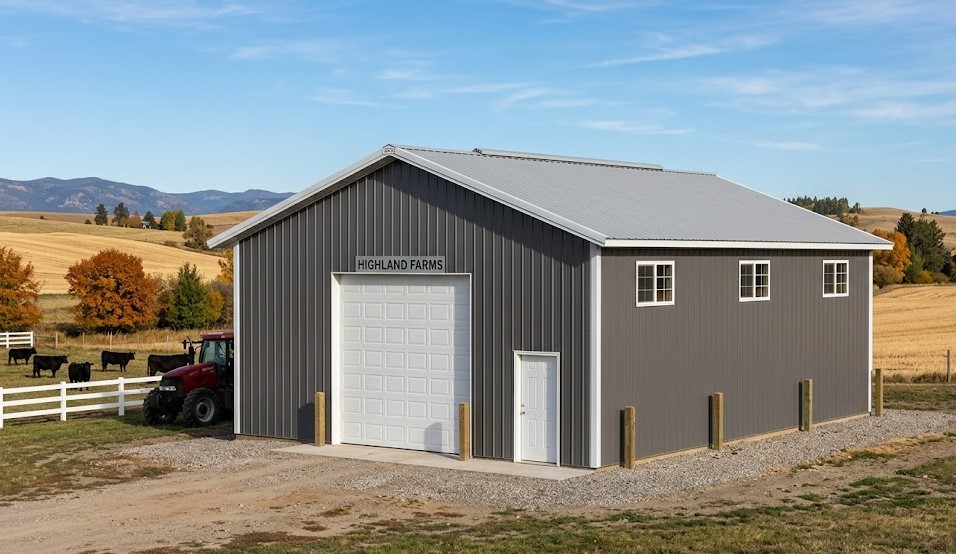
A pole barn is a simple and cost-effective type of building that uses large vertical posts (poles) buried deep in the ground or anchored in concrete to support the entire structure. Instead of relying on a traditional foundation with full concrete walls, the poles carry the load of the roof and walls, which makes the construction process faster and more affordable. Builders often use this method in rural and agricultural areas where large, open spaces are needed for storage or work purposes.
People choose pole barns because they offer flexibility in design and can serve many different functions. These structures provide wide, open interiors without many internal support walls, making them ideal for storing equipment, housing livestock, or creating workshops. In modern construction, pole barns have also become popular for residential use, especially in the form of barndominiums, due to their simplicity, durability, and lower building costs.
History and Development of Pole Barn Construction
The concept of the pole barn developed during the early 20th century when farmers needed a faster and more affordable way to build storage structures. Traditional construction methods required strong foundations and large amounts of materials, which made building expensive and time-consuming. To solve this problem, builders began using utility poles or posts buried directly into the ground to support roofs and walls, creating a simpler and more practical design for agricultural needs.
Over time, pole barn construction evolved from basic farm buildings into more advanced and versatile structures. Improvements in treated wood, steel framing, and modern engineering allowed these buildings to become stronger and more durable. Today, pole barns are no longer limited to farms; people use them for commercial spaces, workshops, storage units, and even residential homes, showing how this simple construction method has developed into a widely used building style.
How a Pole Barn is Built (Step-by-Step Process)
The construction of a pole barn begins with planning and site preparation. Builders select a suitable location and clear the ground before marking the layout. After marking, they dig holes at specific intervals and place large posts, which serve as the main structural support. These posts usually go deep into the ground or get secured with concrete to ensure stability and strength for the entire building.
After installing the posts, builders attach horizontal framing to connect them and form the main structure. Once the frame is complete, they install roof trusses to support the roof system. Finally, they add siding materials such as metal sheets or wood panels to enclose the structure. This step-by-step process allows builders to construct a pole barn quickly compared to traditional buildings while still maintaining durability and functionality.
Materials Used in Pole Barn Construction
A pole barn typically uses a combination of strong and cost-effective materials that ensure durability while keeping construction simple. The main structural components include treated wooden posts or steel columns, which form the foundation of the building. These posts resist moisture, pests, and ground pressure, making them suitable for long-term use in various environmental conditions. Builders often choose pressure-treated lumber to increase strength and extend the lifespan of the structure.
In addition to the main posts, builders use materials such as metal roofing sheets, wooden or metal siding, and engineered trusses for roof support. They may also use concrete at the base of the posts to improve stability. These materials work together to create a strong yet flexible structure that builders can customize for agricultural, commercial, or residential purposes, depending on the user’s needs and budget.
Common Uses of Pole Barns
A pole barn serves many practical purposes, especially in rural and agricultural settings. Farmers commonly use these structures for storing hay, grain, tractors, and other heavy equipment. They also work well as livestock shelters because the open interior space allows easy movement and ventilation. This flexibility makes pole barns a reliable solution for managing large-scale farm operations.
Beyond agriculture, people also use pole barns for workshops, garages, and commercial storage spaces. In recent years, they have gained popularity as residential buildings known as barndominiums, where people convert the open structure into modern living spaces. This wide range of uses shows how adaptable pole barns are for different needs, budgets, and lifestyles.
Advantages of Pole Barn Structures
A pole barn offers several advantages that make it a popular choice for both rural and commercial construction. One of the biggest benefits is its low construction cost compared to traditional buildings. Since it does not require a full concrete foundation and uses fewer materials, builders can complete projects faster and with less expense. This makes pole barns an affordable option for people who need large functional spaces without high investment.
Another major advantage is the flexibility in design and usage. Pole barns provide wide, open interiors without many supporting walls, allowing users to customize the space according to their needs. They also allow faster construction timelines, which means owners can start using the building sooner. Because of their simple structure, pole barns can be easily expanded or modified in the future, making them a practical long-term solution.
Limitations and Considerations
A pole barn offers many benefits, but it also comes with some limitations that builders and owners should consider before construction. One key concern is durability in extreme weather conditions. Since pole barns rely on posts embedded in the ground, improper installation or poor-quality materials can lead to structural issues over time, especially in areas with heavy rainfall or soil movement. This makes proper planning and construction quality very important.
Another consideration is long-term maintenance and building regulations. Wooden posts, even when treated, may face moisture-related wear if not properly protected. In some regions, building codes may also restrict certain types of pole barn construction or require specific engineering standards. These factors mean owners must carefully evaluate local conditions and long-term usage needs before choosing a pole barn structure.
Conclusion
A pole barn remains one of the most practical and cost-efficient building solutions for agricultural, commercial, and even residential use. Its simple post-frame design allows for faster construction, lower costs, and highly flexible space usage. From farms and storage units to modern barndominiums, pole barns continue to prove their value as versatile and durable structures when built with proper planning and quality materials.
At the same time, understanding the limitations of pole barns helps users make better construction decisions. Factors such as weather conditions, material quality, and local building codes all play an important role in long-term performance. When these aspects are carefully managed, a pole barn can serve as a reliable and long-lasting structure for many different needs.
FAQs
What is a pole barn used for?
A pole barn is used for farming, storage, workshops, garages, and even residential homes.
Why is a pole barn cheaper to build?
It costs less because it uses fewer materials and does not require a full foundation.
How long does a pole barn last?
A well-built pole barn can last several decades with proper maintenance.
Can a pole barn be used as a house?
Yes, many people convert pole barns into homes called barndominiums.
Visit for More information : Multiple Magazines