
 Admin
Admin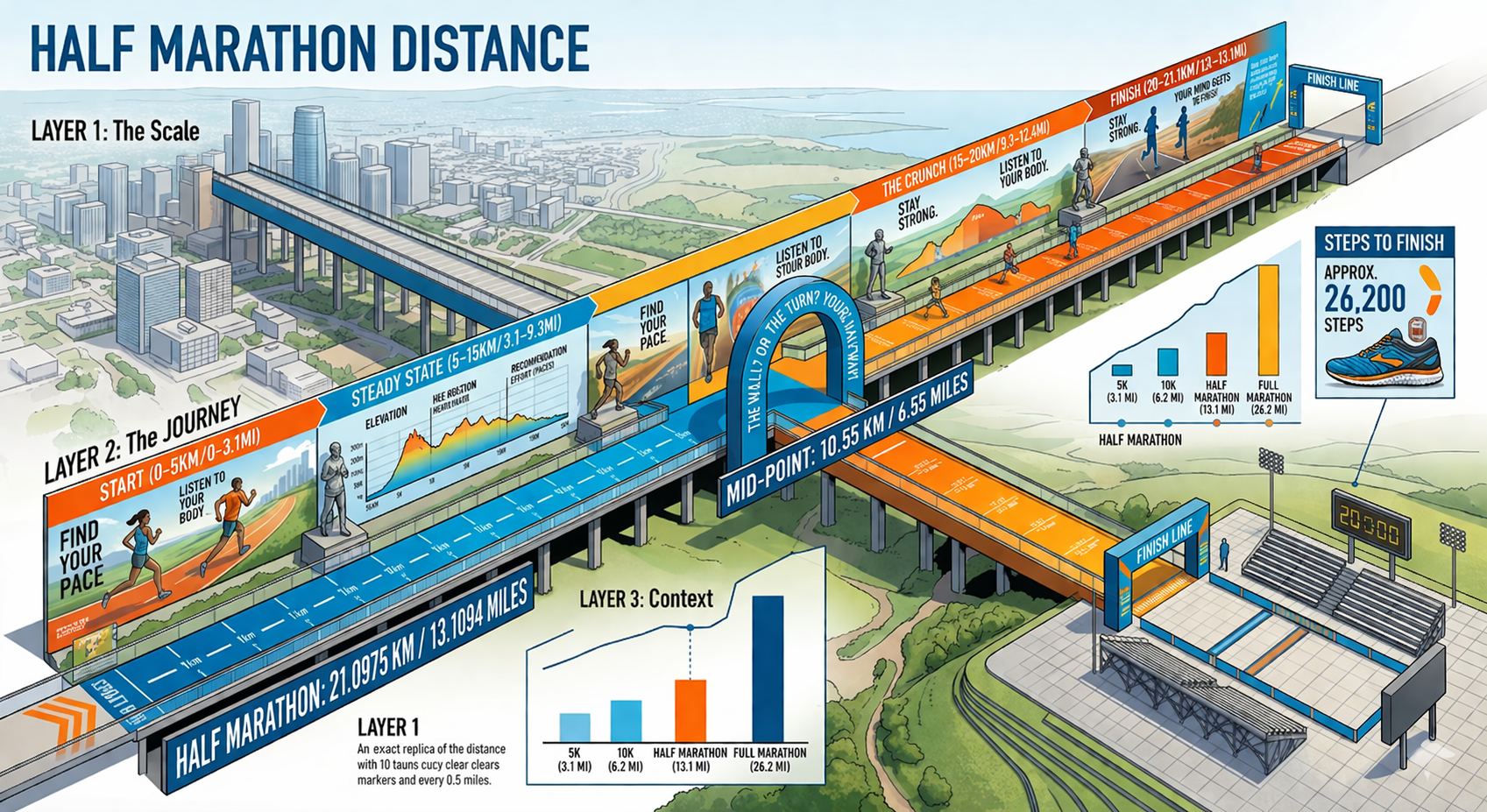
The half marathon distance is officially measured at 21.0975 kilometers, which is commonly rounded to 21.1 kilometers for simplicity in races and training plans. In miles, this equals 13.1094 miles, usually simplified as 13.1 miles in most running events and fitness trackers. This standardized distance is recognized worldwide by major athletics organizations, ensuring every half marathon race follows the same length regardless of country or location. It is exactly half of a full marathon, making it a clear and structured endurance goal for runners of all levels.
Half Marathon vs Full Marathon
The half marathon distance and the full marathon differ mainly in length, training demand, and overall physical challenge. A half marathon covers 21.1 kilometers (13.1 miles), while a full marathon doubles that at 42.195 kilometers (26.2 miles). This difference significantly affects how runners prepare, as a full marathon requires much higher weekly mileage, longer long runs, and greater recovery time compared to a half marathon.
Another key difference is the level of strain placed on the body. A half marathon is still an endurance challenge, but it is generally more manageable for recreational runners who follow a structured training plan. In contrast, a full marathon pushes the body deeper into fatigue, glycogen depletion, and mental endurance, often requiring months of dedicated preparation. Many runners use the half marathon as a stepping stone before attempting the full marathon distance.
Training Requirements for a Half Marathon
Preparing for the half marathon distance requires a balanced training plan that focuses on building endurance, improving stamina, and preventing injury. Most beginner runners typically train for 8 to 12 weeks before race day, depending on their current fitness level. A standard plan usually includes 3 to 5 running sessions per week, combining short easy runs, one long run, and occasional rest or cross-training days to support recovery.
The most important part of training is the long run, which gradually increases each week to help the body adapt to covering greater distances. Alongside running, strength training, proper hydration, and nutrition play a major role in performance. Many runners also practice pacing strategies during training so they can maintain steady energy throughout the race instead of starting too fast and burning out early.
Average Finish Times and Running Pace
Finishing times for the half marathon distance vary widely depending on fitness level, experience, and training consistency. On average, beginner runners usually complete the race in 2 to 3 hours, while more experienced runners may finish between 1 hour 30 minutes and 2 hours. Elite athletes, on the other hand, can complete a half marathon in under 1 hour, maintaining an extremely fast and consistent pace throughout the 21.1 km course.
Running pace is another important factor that determines overall performance. Most recreational runners aim for a pace between 6 to 9 minutes per kilometer, depending on their endurance and training goals. Maintaining a steady pace is crucial because starting too fast often leads to fatigue in the later stages of the race. Proper pacing helps runners conserve energy and finish strong, making it one of the key strategies for successfully completing a half marathon.
Health and Fitness Benefits of Running a Half Marathon
Training for and completing the half marathon distance brings a wide range of physical and mental health benefits. On the physical side, it significantly improves cardiovascular fitness by strengthening the heart, increasing lung capacity, and enhancing overall endurance. Regular training also helps in weight management, as long-distance running burns a high number of calories and boosts metabolism over time. Muscles in the legs, core, and even upper body become stronger due to consistent running and cross-training exercises.
Beyond physical fitness, the mental benefits are equally important. Many runners experience reduced stress levels, improved mood, and better mental clarity due to the release of endorphins during running. Completing a half marathon also builds discipline and confidence, as it requires commitment and structured preparation over several weeks. For many people, achieving this distance becomes a personal milestone that encourages a more active and healthy lifestyle in the long term.
Common Challenges and Mistakes Runners Face
While preparing for the half marathon distance, many runners face common challenges that can affect performance and overall experience. One of the biggest issues is starting too fast during training or on race day. This often leads to early fatigue, making it difficult to maintain energy for the remaining kilometers. Another common challenge is inconsistent training, where runners skip sessions or do not follow a structured plan, resulting in poor endurance development.
Mistakes in nutrition and hydration also play a major role. Some runners underestimate the importance of fueling properly before and during long runs, which can cause energy crashes or dehydration. Overtraining is another frequent issue, where runners push their bodies too hard without enough rest, increasing the risk of injury. Understanding these challenges early and preparing for them can greatly improve performance and make the race experience smoother and more enjoyable.
Tips for Beginners Preparing for Their First Race
Preparing for your first half marathon distance can feel challenging, but with the right approach, it becomes much more manageable and enjoyable. One of the most important tips is to follow a structured training plan that gradually increases your running distance each week. This helps your body adapt safely and reduces the risk of injury. Consistency is more important than speed, so focus on completing your scheduled runs rather than pushing too hard too soon.
Another key tip is to practice proper pacing during training runs so you can maintain steady energy throughout the race. Beginners should also pay attention to hydration and nutrition, especially on long run days, to avoid fatigue. Rest days are equally important because they allow your muscles to recover and grow stronger. Lastly, choosing comfortable running shoes and practicing race-day routines in advance can boost confidence and improve overall performance.
Conclusion
The half marathon distance is more than just a number—it represents a meaningful endurance challenge that balances ambition with achievability. At 21.1 kilometers (13.1 miles), it sits perfectly between shorter fun runs and the demanding full marathon, making it one of the most popular races in the world. Whether someone is running for fitness, personal achievement, or competition, completing a half marathon builds physical strength, mental resilience, and long-term discipline.
With proper training, consistent effort, and smart pacing, most beginners can successfully complete this distance and enjoy the experience. The journey toward a half marathon often becomes just as rewarding as the finish line itself, helping runners develop healthier lifestyles and stronger confidence in their abilities.
FAQs
What is the exact half marathon distance?
It is 21.0975 km or 13.1 miles.
How long does it take to train for a half marathon?
Most beginners need 8 to 12 weeks of consistent training.
Is a half marathon difficult for beginners?
It is challenging but achievable with a proper training plan and gradual progress.
Can I walk during a half marathon?
Yes, many participants mix walking and running to complete the race comfortably.
Visit for More information : Multiple Magazines