
 Admin
Admin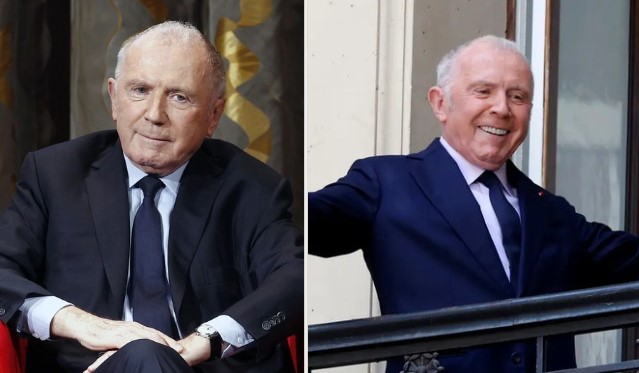
François Pinault is a French businessman whose career transformed a modest timber-trading company into one of France’s most influential business groups. His name is closely associated with Kering, the luxury empire that grew from the company he founded in Brittany in 1962. Beyond business, Pinault became a major figure in the international art world through the Pinault Collection and his ownership of Christie’s. His story is notable because his interests expanded far beyond one industry, reaching fashion, art, wine, sports, entertainment, and cultural institutions. Unlike many entrepreneurs who remain focused on their original sector, Pinault repeatedly repositioned his business interests as markets changed. Today, the Pinault family continues to have a major presence in luxury, culture, and investment through Artémis and its various holdings. This profile looks at François Pinault’s origins, business career, art collecting, family legacy, wealth, philanthropy, and continuing influence.
Quick Bio
| Detail | Information |
|---|---|
| Full Name | François Pinault |
| Known For | French businessman, entrepreneur, art collector |
| Famous Connection | French business and luxury industry |
| Relationship | Founder and business leader |
| Profession | Businessman, entrepreneur, art collector |
| Birth Date | August 21, 1936 |
| Birthplace | Les Champs-Géraux, Brittany, France |
| Nationality | French |
| Children | Three |
| Education | Left formal schooling before completing high school |
| Major Business Legacy | Kering and Artémis |
| Art Connection | Founder of the Pinault Collection |
| Current/Public Status | Honorary Chairman associated with Kering and active through the Pinault family’s business and cultural interests |
Who Is François Pinault?

François Pinault is a French entrepreneur who built his reputation through a series of major business transformations. His career did not begin in fashion or luxury. In 1962, at the age of 26, he established a timber-trading business in Rennes, Brittany. The company expanded through acquisitions and eventually became a significant player in the French timber industry.
The business was later diversified into retail and distribution. The group acquired interests that eventually led to the creation of Pinault-Printemps-Redoute, commonly known as PPR. This period established Pinault as a major French businessman and prepared the ground for the much more dramatic shift that would follow.
The most important strategic change came in the late 1990s, when Pinault moved toward luxury goods. The acquisition of a controlling stake in Gucci Group in 1999 became a defining moment. From there, the business accumulated prestigious fashion and luxury brands, ultimately creating the foundation for what became Kering.
From Timber Trading to a Global Business Empire
The early chapter of François Pinault’s career is important because it shows how different his original business was from the luxury empire associated with his name today.
His first company concentrated on timber trading, a practical industry closely connected to Brittany’s economy. Rather than remaining confined to one market, Pinault expanded through acquisitions and built a larger business platform. The company entered the stock market in 1988, marking another major step in its development.
During the 1990s, the group moved into specialized retail distribution. It acquired major businesses and developed into PPR. This transformation demonstrated Pinault’s willingness to move away from the sector in which he originally built his fortune.
The eventual move into luxury was even more consequential. The acquisition of Gucci and subsequent investments in luxury houses changed the character of the business and helped establish the Pinault family as a powerful force in global fashion.
The Gucci Decision That Changed His Career
François Pinault’s decision to move into luxury goods was one of the most consequential moments in his business career. In 1999, his group acquired a controlling stake in Gucci Group, creating a platform for further expansion into high-end fashion and accessories.
The strategy eventually brought several internationally recognized names into the wider group. Kering’s historical record includes acquisitions involving Bottega Veneta, Balenciaga, and other prestigious houses, while the company continued to reshape its portfolio over time.
This was more than an acquisition strategy. It represented a change in Pinault’s business philosophy. The group was increasingly built around brands with strong identities, cultural value, craftsmanship, and international recognition.
Building the Kering Legacy
PPR was renamed Kering in 2013, reflecting the group’s transformation into a luxury-focused company. The name also maintained a connection to the Pinault family’s Breton roots; Kering explains that “ker” is a Breton word associated with home or living space.
Although François Pinault eventually stepped away from day-to-day leadership, his influence remained embedded in the group. His son, François-Henri Pinault, became the central executive figure in the next generation of the family’s business.
François-Henri joined the Pinault group in 1987 and later became chairman and CEO of Kering. In September 2025, he handed over the CEO role to Luca de Meo while remaining chairman of Kering’s board. This transition illustrates how the business legacy created by François Pinault evolved into a multigenerational enterprise.
Who Is François Pinault, the French Businessman?
The description “French businessman” is central to François Pinault’s public identity because entrepreneurship is the foundation of his career. He is not simply known for owning luxury assets; his significance comes from building and repeatedly restructuring businesses over several decades.
His career covers timber, retail, luxury fashion, art, wine, entertainment, sports, and other investments. Through Artémis, the Pinault family’s holding company, the family’s interests extend beyond Kering to companies and cultural assets including Christie’s, the Pinault Collection, vineyards, Ponant, Creative Artists Agency, and Stade Rennais.
This broad portfolio helps explain why Pinault is regarded as more than a traditional fashion-industry businessman. His influence reaches several parts of the global economy and cultural world.
François Pinault and the Art World
One of the most distinctive parts of François Pinault’s story is his relationship with contemporary art. He began collecting art in the 1970s, gradually developing a collection that grew into one of the world’s major private contemporary-art collections.
Christie’s has described the Pinault Collection as containing more than 10,000 works spanning art from the 1960s to the present. The collection includes works by internationally recognized artists and has been presented through exhibitions in major cultural venues.
Pinault’s approach to collecting has also been closely connected to public access. The collection is presented through institutions including the Bourse de Commerce in Paris and the Palazzo Grassi and Punta della Dogana in Venice.
For Pinault, art became more than a private financial asset. His collection developed into a major cultural project that allows members of the public to encounter contemporary works through exhibitions and museums.
His Ownership of Christie’s
Another major chapter in François Pinault’s business career came through Artémis’s ownership of Christie’s, the historic auction house.
The Pinault family’s association with Christie’s has continued for decades, making art an important component of the family’s broader business strategy. In 2025, Christie’s announced that François Pinault and François-Henri Pinault were overseeing a new organization for the family’s artistic and cultural activities.
In 2026, Christie’s further confirmed François Pinault’s continuing role by describing him as Honorary Chair while his son, François-Henri Pinault, became chairman of the board. This reflects the family’s continuing involvement in one of the world’s most prominent art businesses.
François Pinault’s Interest in Contemporary Art
Pinault’s collecting philosophy is particularly associated with contemporary art rather than simply acquiring traditional masterpieces for private display.
His collection has included works by artists such as Cindy Sherman, Luc Tuymans, Marlene Dumas, Thomas Houseago, and others. Exhibitions drawn from the collection have demonstrated the breadth of his interests, particularly in painting, sculpture, photography, and works dealing with identity and the human figure.
A 2025 exhibition at Christie’s Los Angeles, for example, presented selected works from the Pinault Collection and highlighted its extensive focus on portraiture. Such exhibitions demonstrate how Pinault’s private collecting has developed into a public cultural presence.
Artémis and the Pinault Family Business
Artémis became an important structure for managing the Pinault family’s diverse interests. Rather than concentrating the family’s activities solely around Kering, Artémis provides a broader platform for investments across multiple sectors.
The family’s interests include luxury and fashion, art and auction businesses, wine, entertainment, sports, and travel. This diversification has allowed the Pinault family to maintain an economic presence even as individual industries experience periods of expansion or decline.
The structure also demonstrates the transition from François Pinault as an individual entrepreneur to a family-controlled investment organization capable of operating across international markets.
Family and the Next Generation
Family succession is another important element of François Pinault’s story. His son, François-Henri Pinault, became deeply involved in the family business and eventually took over major leadership responsibilities.
François-Henri’s career within the Pinault group began in 1987. He later became chairman of Artémis and, in 2005, took charge of PPR. Under his leadership, the company continued its transformation into a global luxury group and adopted the Kering name.
This transition shows that François Pinault’s legacy is not limited to the companies he personally built. It also includes the business structure and leadership tradition passed to the next generation.
François Pinault’s Connection to Kering Today
François Pinault is no longer the executive running Kering’s daily operations, but his connection with the company remains fundamental because he founded the business that eventually became Kering.
Kering’s own history identifies 1962 as the starting point of the group’s story, when Pinault founded Établissements Pinault in Rennes. The company’s evolution from timber trading to distribution and finally luxury reflects the long-term strategic changes associated with the founder’s vision.
Today, Kering is led by a new executive structure, while the Pinault family remains a major shareholder through its holding interests. François-Henri Pinault continues to serve as chairman of the Kering board.
Philanthropy and Cultural Influence
François Pinault’s public legacy also extends into philanthropy and cultural support. The Pinault family has supported major cultural projects and contributed to the preservation of important French heritage.
The family attracted particular attention after pledging more than €100 million toward the reconstruction of Notre-Dame Cathedral following the 2019 fire. Such contributions illustrate the family’s role in French cultural life beyond commercial activities.
His art institutions also represent a form of cultural investment, giving the public opportunities to see works that might otherwise remain inside private collections.
François Pinault’s Net Worth and Financial Life
François Pinault’s wealth is closely connected to his ownership interests and the wider assets of the Pinault family. Forbes estimated François Pinault and his family at approximately $26.1 billion in September 2026, placing them among the world’s wealthiest families.
However, a family wealth estimate should not be treated as the same thing as François Pinault’s personal cash holdings. Much of the family’s wealth is connected to ownership stakes, companies, investments, property, art, and other assets whose values can change.
For this reason, net-worth figures published by wealth rankings should be understood as estimates rather than a precise statement of liquid personal wealth.
François Pinault’s Life Beyond Business
Although business remains the foundation of François Pinault’s public profile, his interests have expanded significantly beyond corporate management.
Art has become one of the most visible parts of his later public identity. His collection, museums, exhibitions, and relationship with Christie’s have given him a continuing role in the international art world.
The broader Artémis portfolio also demonstrates the range of interests developed by the Pinault family. From vineyards and entertainment to sports and luxury travel, the family’s activities reflect a strategy that goes beyond any single industry.
Why François Pinault Remains Important
François Pinault’s significance comes from the scale and direction of his transformation. He began with a regional timber company and ultimately became associated with global luxury brands, a major auction house, an extensive contemporary-art collection, and a diversified family investment group.
His story also illustrates the changing nature of modern entrepreneurship. Rather than building one company and remaining within one sector, Pinault repeatedly repositioned his interests according to new opportunities.
That adaptability is arguably one of the defining characteristics of his career and a major reason his name continues to matter in French business and international luxury.
Conclusion
François Pinault’s journey is a story of transformation rather than a simple rise from entrepreneur to billionaire. He started with a timber-trading company in Brittany and gradually built a business empire that moved through retail, luxury fashion, art, and international investment.
His most lasting corporate legacy is the business that evolved into Kering, while his cultural legacy is strongly represented by the Pinault Collection and the family’s involvement with Christie’s. His son François-Henri Pinault has continued the family’s role in these businesses, creating a clear connection between the founder’s achievements and the next generation.
For anyone researching François Pinault, the most revealing part of his story is the ability to move between industries while maintaining a long-term family business strategy. His influence now extends beyond traditional business into fashion, art, culture, and philanthropy, making him one of the most notable French businessmen of his generation.
FAQs
Who is François Pinault?
François Pinault is a French businessman, entrepreneur, art collector, and founder of the business that eventually became Kering. He began his career in timber trading before expanding into retail, luxury, and other international investments.
What is François Pinault best known for?
He is best known for founding the business that developed into Kering and for building the Pinault family’s wider business interests. He is also internationally recognized for his contemporary-art collection and ownership of Christie’s through Artémis.
How did François Pinault become wealthy?
Pinault built his fortune through entrepreneurship, acquisitions, and long-term ownership of businesses. His original timber company expanded into distribution before the family moved heavily into luxury goods and other industries.
Is François Pinault still involved with Kering?
François Pinault remains closely associated with Kering as its founder and honorary chairman. His son, François-Henri Pinault, currently serves as chairman of Kering’s board after Luca de Meo took over as CEO in September 2025.
Does François Pinault own Christie’s?
Christie’s is owned by Artémis, the Pinault family’s holding company. François Pinault has remained closely involved with the family ownership, while François-Henri Pinault became chairman of Christie’s board in 2026.
How large is François Pinault’s art collection?
The Pinault Collection contains more than 10,000 works according to Christie’s. It focuses primarily on contemporary art and is exhibited through institutions including the Bourse de Commerce in Paris and venues in Venice.
What is François Pinault’s net worth?
Forbes estimated François Pinault and his family at about $26.1 billion in September 2026. This is a family wealth estimate rather than a precise measure of François Pinault’s personal liquid assets.
Visit for More information : Multiple Magazines