 Admin
Admin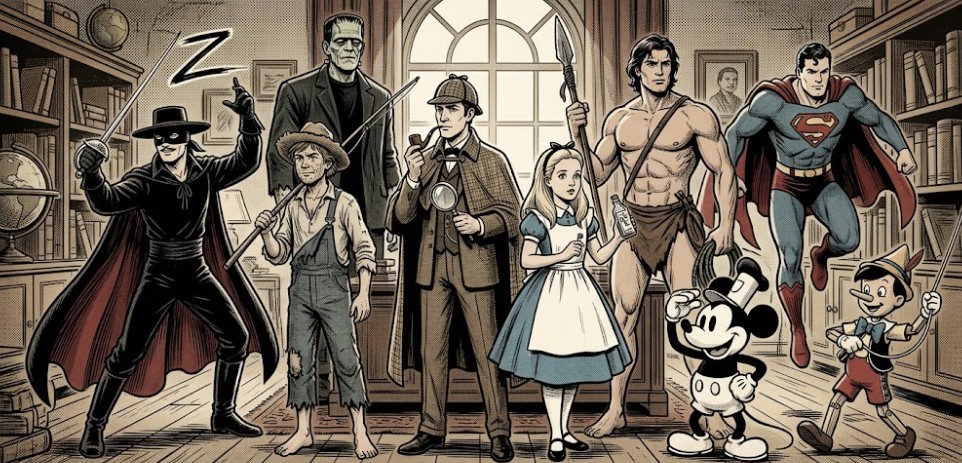
Public domain characters enter the public domain mainly when their original copyright protection expires under intellectual property laws. Copyright duration varies by country, but in many regions, a work typically becomes public domain a certain number of years after the creator’s death or after publication. Once this protection ends, the character and its original stories become free for public use, meaning anyone can legally reuse or adapt them without paying fees or seeking permission.
Another way characters enter the public domain is when creators intentionally release their work without copyright restrictions or when the work was never eligible for copyright protection in the first place. Over time, this process allows classic literature, folklore, and early fictional works to become part of shared cultural heritage. However, while the original public domain characters become free to use, newer adaptations or modern versions of those characters may still remain protected under separate copyrights, which creators must carefully consider before using them.
Famous Public Domain Characters List
Public domain characters include many iconic figures from literature, folklore, and early storytelling that continue to influence modern entertainment. These characters come from works whose original copyrights have expired, allowing creators to freely use and reinterpret them in new formats such as films, books, comics, and video games. Because of this freedom, they remain popular sources of inspiration across creative industries.
Some of the most well-known public domain characters include Sherlock Holmes, Dracula, Frankenstein’s Monster, Robin Hood, and Alice from Alice’s Adventures in Wonderland. Each of these characters comes from classic literary works, and creators have reimagined them countless times in different styles and genres. For example, Dracula appears in horror films, romantic adaptations, and even animated series, while Sherlock Holmes continues to appear in modern detective stories. These examples show how public domain status allows timeless characters to evolve and remain relevant across generations.
Why Public Domain Characters Matter in Modern Media
Public domain characters play a major role in today’s entertainment and creative industries because they allow writers, filmmakers, and developers to build new stories without legal restrictions. This freedom reduces production costs and removes the need for licensing agreements, making it easier for both independent creators and large studios to experiment with classic characters. As a result, public domain works continue to inspire fresh content in movies, books, video games, and digital media.
Another important reason public domain characters matter is their ability to keep storytelling traditions alive while allowing innovation. Creators reinterpret these characters in modern settings, change their personalities, or combine them with new storylines to attract today’s audiences. For example, classic characters like Dracula and Robin Hood appear in countless genres, from horror to action-adventure. This flexibility keeps older stories relevant and gives creators the opportunity to produce original and engaging content based on well-known figures.
Legal Rules You Must Understand
Understanding the legal side of public domain characters matters before using them in any creative project. Although these characters are free to use, not everything related to them stays automatically free. The original version of a character may belong to the public domain, but newer adaptations, movies, illustrations, or rewritten stories can still carry copyright protection. This means creators must carefully check which version of the character they use to avoid legal issues.
Another key rule involves different countries following different copyright laws, which can change when a character officially enters the public domain. In some regions, a character may already be free to use, while in others, protection may continue for a few more years. Because of this, creators working with public domain characters should always verify copyright status based on their location and intended use. This careful approach helps creators keep their projects legally safe while still benefiting from the creative freedom that public domain works provide.
Case Study: Public Domain in Film & Games
The use of public domain characters has become a powerful strategy in both the film and gaming industries. Many production companies and independent creators choose public domain stories because they already have strong audience recognition, which reduces marketing effort while increasing creative flexibility. Filmmakers often reimagine classic characters like Dracula or Frankenstein’s Monster in new settings, genres, and visual styles, allowing them to build fresh narratives without starting from scratch. This approach helps studios save licensing costs while still producing content that feels familiar and engaging to audiences.
In the gaming industry, public domain characters also play a major role in inspiring new story-driven experiences. Game developers use these characters to build fantasy worlds, horror adventures, or action-based storylines that attract players who already know the original legends. For example, many games reintroduce mythological or literary figures in modern gameplay formats, combining classic storytelling with interactive experiences. This creative freedom allows developers to innovate while relying on well-established characters that already have global recognition, making public domain content a valuable asset for both storytelling and commercial success.
Benefits for Creators and Businesses
Public domain characters offer major advantages for creators, writers, and businesses because they remove the legal and financial barriers usually associated with copyrighted material. Since these characters are free to use, creators can develop books, films, games, and digital content without paying licensing fees or negotiating permissions. This significantly lowers production costs and allows independent creators and small studios to compete with larger companies by using well-known characters as a foundation for new ideas.
Another key benefit of public domain characters is the freedom to innovate and experiment. Creators can modify storylines, redesign characters, and place them in completely new environments without restrictions. This flexibility helps businesses produce unique content while still benefiting from the recognition of classic characters. As a result, public domain works not only encourage creativity but also support faster content production and wider storytelling possibilities across entertainment, education, and digital media industries.
Conclusion
Public domain characters continue to play a powerful role in modern storytelling by giving creators complete freedom to reuse and reimagine classic figures without legal barriers. From literature and folklore to films and video games, these characters help preserve cultural heritage while also supporting innovation in creative industries. Because their original copyrights have expired, anyone can adapt them into new stories, making them valuable resources for writers, filmmakers, and digital creators.
At the same time, understanding legal boundaries remains essential, since newer adaptations of these characters may still be protected. When used correctly, public domain characters offer endless opportunities for creativity, cost savings, and audience engagement, making them an important part of both traditional and modern media.
FAQs
What are public domain characters?
They are fictional characters whose original copyrights have expired, allowing free public use.
Can I use public domain characters commercially?
Yes, you can use them in books, films, games, and other projects without paying licensing fees.
Are all versions of public domain characters free to use?
No, only the original versions are free; modern adaptations may still be copyrighted.
Why are public domain characters important?
They support creativity, reduce costs, and allow new adaptations in entertainment and media.
Visit for More information : Multiple Magazines