 Admin
Admin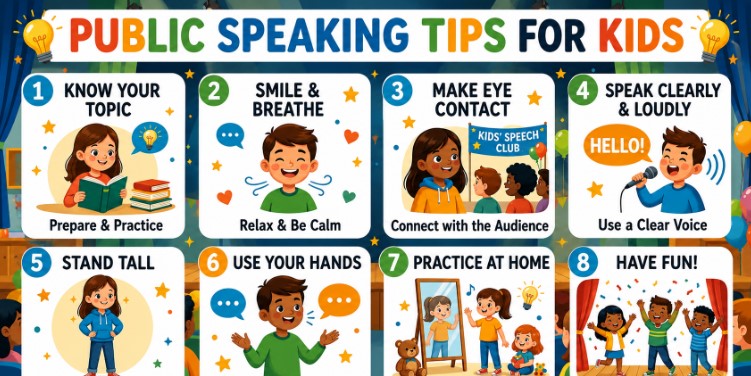
Many children feel nervous or scared when they are asked to speak in front of a class or group. This fear is very common and happens because kids worry about making mistakes, forgetting their words, or being judged by others. Even adults sometimes feel the same way, so children should understand that this feeling is completely normal and nothing to be ashamed of. Learning public speaking tips for kids helps reduce this fear by slowly building confidence through practice and support.
One of the main reasons behind this fear is lack of experience. When children do not speak often in front of others, their mind treats public speaking as something difficult or stressful. However, when they start practicing in a safe and friendly environment, the fear gradually becomes smaller. Teachers and parents can help by encouraging kids to speak in small groups first, then slowly move to larger audiences. This step-by-step exposure helps the child feel more comfortable and confident over time.
Building Confidence Through Daily Practice
Confidence in speaking does not develop overnight; it grows slowly through regular practice. When children practice speaking every day, even for a few minutes, they start to feel more comfortable with their voice and ideas. Simple activities like reading aloud, describing their day, or telling a short story at home can significantly improve their speaking ability. Using public speaking tips for kids consistently helps children turn nervousness into confidence over time.
Daily practice also helps children reduce hesitation and improve fluency. The more they speak, the less they fear making mistakes because they begin to understand that mistakes are a natural part of learning. Parents and teachers can create a supportive environment where children feel safe to practice without pressure. Over time, this consistent effort builds strong communication skills and helps kids speak clearly in school presentations, group discussions, and other social situations.
Simple Techniques to Improve Speech Clarity
Clear speech is one of the most important parts of good public speaking. When children speak clearly, their audience can easily understand their message without confusion. One of the best public speaking tips for kids is to slow down while speaking. Many kids speak too fast because of excitement or nervousness, which can make their words unclear. Practicing at a steady pace helps improve pronunciation and overall clarity.
Another helpful technique is breaking sentences into small, simple parts. Instead of using long and complicated sentences, children should focus on short and easy phrases. This makes it easier to remember what to say and also helps the audience follow along. Practicing tongue twisters, reading books aloud, and recording their voice are also effective ways to improve speech clarity. With regular effort, kids can develop a strong and confident speaking style that sounds natural and easy to understand.
Using Body Language and Eye Contact Effectively
Body language plays a powerful role in public speaking because it shows confidence even before a child starts speaking. Simple actions like standing straight, keeping shoulders relaxed, and using natural hand movements can make a big difference in how a message is received. When children learn public speaking tips for kids, they also learn that communication is not just about words but also about how those words are delivered.
Eye contact is another important skill that helps connect the speaker with the audience. When kids look at their listeners instead of the floor or ceiling, they appear more confident and engaged. At first, this may feel uncomfortable, but with practice, it becomes natural. Teachers can encourage students to look at friendly faces in the audience or shift eye contact gently from one person to another. Together, strong body language and eye contact help children appear more confident, even if they still feel a little nervous inside.
Fun Activities to Improve Public Speaking Skills
Learning public speaking does not always need to feel serious or stressful. In fact, fun activities can make the process much easier and more enjoyable for children. One of the best public speaking tips for kids is to turn practice into a game. Activities like storytelling contests, role-playing, and “show and tell” sessions at home or school can help kids express themselves freely without pressure.
Another helpful activity is mirror speaking, where children practice their speech in front of a mirror. This allows them to observe their facial expressions, gestures, and posture while speaking. Group activities such as small debates or speaking circles also help kids learn how to listen and respond confidently. When learning becomes fun, children naturally become more interested and less afraid of speaking in front of others, which greatly improves their communication skills over time.
Role of Parents and Teachers in Skill Development
Parents and teachers play a very important role in helping children improve their speaking abilities. When adults provide encouragement instead of criticism, children feel more confident and willing to try again even after making mistakes. One of the most effective public speaking tips for kids is consistent positive support from adults, which helps reduce fear and builds a safe learning environment.
Teachers can create opportunities in the classroom where every child gets a chance to speak, such as short presentations, reading sessions, or group discussions. Parents can also support by listening patiently at home and asking simple questions that encourage children to express their thoughts. When children feel heard and valued, they naturally become more confident in sharing their ideas in front of others. This combined support from home and school plays a key role in shaping strong communication skills.
Common Mistakes Kids Should Avoid
When children are learning to speak in front of others, making mistakes is completely normal. However, understanding common mistakes early can help them improve faster. One major issue is speaking too fast, which often happens due to excitement or nervousness. This makes it difficult for the audience to understand the message clearly. One of the most useful public speaking tips for kids is to slow down and take small pauses while speaking.
Another common mistake is memorizing the speech word-for-word without understanding it. When kids forget a line, they may panic and lose confidence. Instead, it is better to understand the main idea and speak naturally. Avoiding poor posture, not making eye contact, and speaking in a very low voice are also mistakes that can reduce impact. By being aware of these issues, children can gradually improve their speaking style and become more confident communicators.
How Practice Builds Confidence
A simple real-life example shows how practice can completely change a child’s confidence in public speaking. Imagine a student named Ayaan who was very shy and afraid to speak in front of his class. At first, he would forget his words, look down, and feel nervous every time he was asked to speak. However, with regular practice and guidance, he slowly began improving. This is one of the strongest public speaking tips for kids—consistent practice leads to real progress.
Ayaan started by speaking in front of a mirror and then practiced short speeches with his family. Over time, he began participating in school activities like storytelling and class presentations. Each small success boosted his confidence further. Eventually, he was able to speak clearly in front of his classmates without fear. This example shows that public speaking is not an inborn talent but a skill that grows with patience, effort, and practice.
Conclusion
Public speaking is a valuable skill that helps children express their thoughts clearly and confidently. By following simple public speaking tips for kids, such as regular practice, improving speech clarity, using positive body language, and receiving support from parents and teachers, children can overcome fear and become effective communicators. This journey takes time, but every small step makes a big difference in building long-term confidence.
In the end, the most important thing is consistency and encouragement. When kids are given the right environment to speak without fear of judgment, they naturally grow into confident speakers. Public speaking is not about being perfect—it is about being understood, and with steady practice, every child can achieve that.
FAQs
What are the best public speaking tips for kids?
The best tips include daily practice, speaking slowly, using simple words, maintaining eye contact, and staying confident while speaking.
How can kids overcome fear of public speaking?
Kids can overcome fear by practicing regularly, starting with small audiences, and receiving positive encouragement from parents and teachers.
At what age should children start public speaking practice?
Children can start basic speaking activities as early as preschool age through storytelling, reading aloud, and simple class participation.
How can parents help improve public speaking skills?
Parents can help by listening patiently, encouraging practice at home, and providing a supportive environment without criticism.
Visit for More information : Multiple Magazines