 Admin
Admin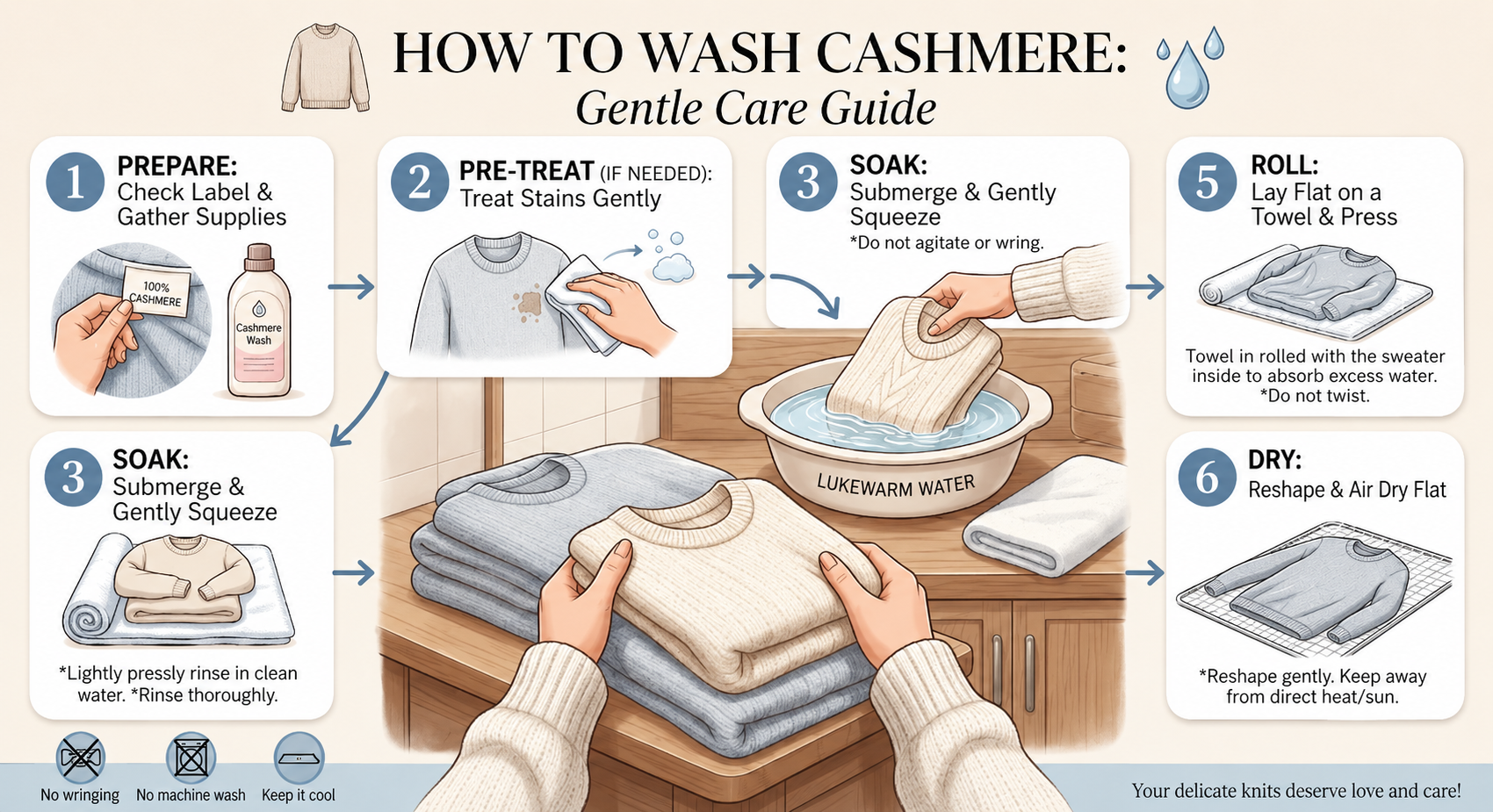
Cashmere is one of the most luxurious and delicate natural fabrics in the world, so it requires a gentle and thoughtful approach when you clean and maintain it. Unlike regular wool or synthetic materials, cashmere fibers are extremely fine and soft, which makes them more vulnerable to heat, harsh chemicals, and rough handling. Even a small mistake during washing can shrink, stretch, or reduce its signature softness. Because of this sensitivity, you must understand how to wash cashmere properly if you want your garments to last for years without losing their premium feel.
Another important reason cashmere needs special care is its natural structure. The fibers are loosely spun compared to other fabrics, which gives cashmere its lightweight warmth and smooth texture. However, this structure also makes it more prone to pilling and shape distortion when you do not handle it correctly. Regular washing methods used for everyday clothing can be too aggressive for cashmere and can cause long-term damage. That is why experts consistently recommend gentle washing techniques, minimal friction, and careful drying practices to help you maintain the quality, appearance, and durability of cashmere clothing over time.
Things You Need Before Washing Cashmere
Before you begin the process of cleaning cashmere, it is important to gather all the right materials so the washing experience is smooth, safe, and damage-free. Using the correct supplies plays a major role in protecting the delicate fibers, because cashmere reacts poorly to harsh detergents and improper handling tools. A mild detergent designed for wool or delicate fabrics is essential, as it helps remove dirt while preserving the softness of the material. Many people also prefer baby shampoo as a gentle alternative because it does not contain strong chemicals that can weaken natural fibers.
In addition to detergent, you need a clean basin or sink filled with cool or lukewarm water, the safest temperature for washing cashmere. A soft towel is also necessary for drying because it helps absorb excess water without twisting or stretching the garment. If you plan to use a washing machine, a mesh laundry bag is highly recommended to protect the fabric from friction. Preparing these items in advance ensures you can follow how to wash cashmere correctly without rushing and reduces the risk of mistakes that could damage your clothing.
How to Wash Cashmere by Hand Step by Step
Hand washing is widely considered the safest and most effective method when you learn how to wash cashmere because it gives you full control over the temperature, movement, and overall handling of the fabric. To begin, fill a clean basin with cool or lukewarm water and add a small amount of mild detergent. Never use hot water because high temperatures can cause the delicate fibers to shrink or lose their natural softness. After you gently mix the detergent into the water, place the cashmere garment inside and let it soak fully without rubbing or scrubbing.
After soaking for around 10 to 15 minutes, gently move the garment through the water using soft hand motions. The key is to avoid any harsh agitation, as friction can lead to pilling and weaken the fibers over time. Once cleaned, drain the soapy water and refill the basin with fresh cool water to rinse the garment thoroughly. Press the fabric gently against the side of the basin to remove excess water, but never twist or wring it. Finally, place the cashmere on a clean towel, roll it carefully to absorb moisture, and prepare it for flat drying. This gentle process helps maintain the softness, shape, and long-lasting quality of cashmere clothing.
Can You Machine Wash Cashmere Safely?
Machine washing cashmere is possible, but it requires extra caution and the right settings to avoid damaging the fabric. While hand washing is still the safest method, modern washing machines often include delicate or wool cycles that can handle cashmere if used correctly. The most important rule is to always use cold water and a gentle cycle, as heat and strong spinning can weaken the fibers and cause the garment to lose its original shape. Placing the cashmere item inside a mesh laundry bag adds an extra layer of protection by reducing friction during the wash cycle.
Wash cashmere separately or with other delicate fabrics to prevent rough materials from rubbing against it. Use a small amount of mild detergent because it is enough to clean the fabric without stripping its natural softness. After the cycle finishes, remove the garment immediately to avoid wrinkles or stretching. Never put cashmere in a dryer because heat can cause irreversible shrinkage. Instead, reshape the garment gently and move it on to air drying. When you handle it carefully, machine washing becomes a convenient option, but it still requires attention to detail to preserve the quality of your cashmere items.
Common Mistakes That Damage Cashmere
One of the biggest reasons cashmere garments lose their softness and shape is due to simple but avoidable washing mistakes. A very common error is using hot water, which can cause the delicate fibers to shrink and become stiff. Cashmere is highly sensitive to temperature changes, so even slightly warm water can slowly damage the texture over time. Another frequent mistake is using regular laundry detergents, which often contain strong chemicals that strip away the natural softness of the fabric and lead to roughness after repeated washes.
Another damaging habit is aggressively handling the fabric during or after washing. Many people tend to wring or twist cashmere to remove water, but this can stretch and weaken the fibers permanently. Hanging wet cashmere is also a major mistake because the weight of the water pulls the garment downward, causing it to lose its original shape. Additionally, exposing cashmere to direct sunlight or high heat during drying can make the fabric brittle. Avoiding these common errors is essential if you want to properly follow how to wash cashmere and keep your clothing in excellent condition for years.
How to Dry and Store Cashmere Correctly
Drying cashmere properly matters just as much as washing it because incorrect drying methods can undo all the care you take during cleaning. After you gently remove excess water using a towel, always lay the garment flat on a clean, dry surface. This helps the cashmere maintain its natural shape and prevents stretching that can occur if you hang the fabric while it is wet. Never expose cashmere to direct heat sources like radiators, hair dryers, or tumble dryers because high temperatures can damage the delicate fibers and cause shrinkage.
Once the garment dries fully, move to proper storage as the next key step in maintaining its quality. Always fold cashmere neatly instead of hanging it in a wardrobe because hanging can stretch the shoulders and change the shape over time. Store it in a cool, dry place away from moisture and direct sunlight. Use breathable storage bags or cotton containers to protect the fabric from dust and moth damage. When you combine careful drying with smart storage habits, you significantly extend the life and softness of your cashmere clothing and keep it in excellent condition.
Tips to Keep Cashmere Soft and Long-Lasting
Keeping cashmere soft and long-lasting is not only about washing it correctly but also about building good everyday care habits. One of the most important tips is to avoid washing cashmere too frequently. Since the fabric is naturally self-cleaning to some extent and does not trap odors easily, it only needs to be washed after several wears unless it is visibly dirty. Overwashing can weaken the fibers over time and reduce the luxurious softness that makes cashmere special.
Another helpful practice is to gently remove pilling using a cashmere comb or fabric shaver instead of pulling the pills by hand, which can damage the material. Rotating your cashmere garments instead of wearing the same piece repeatedly also helps reduce stress on the fibers. Proper folding instead of hanging prevents stretching, while storing items with natural moth repellents like cedar or lavender helps protect them during long storage periods. When these simple habits are followed consistently, they play a big role in preserving both the appearance and feel of cashmere for many years.
Conclusion
Understanding how to wash cashmere properly is the key to keeping this luxurious fabric soft, elegant, and long-lasting. Cashmere may look delicate—and it is—but with the right care routine, it can stay in excellent condition for years without losing its signature comfort and warmth. Gentle hand washing, or careful machine washing on delicate settings, helps protect the fibers from damage, while correct drying and storage ensure the garment maintains its original shape and texture.
The most important takeaway is that cashmere does not require complicated care, just careful handling. Avoiding heat, harsh detergents, and rough treatment makes a huge difference in preserving quality. When combined with mindful habits like limited washing, proper folding, and safe storage, your cashmere pieces will continue to look and feel luxurious season after season. With consistent care, this premium fabric remains a timeless investment in your wardrobe rather than a fragile item that wears out quickly.
FAQs
How often should you wash cashmere?
Cashmere should be washed only after 4–10 wears, depending on how much it is used. Overwashing can weaken the fibers and reduce softness.
Can you use regular detergent for cashmere?
No, regular detergents are too harsh for cashmere. It is best to use a mild wool or delicate fabric detergent to protect the fibers.
What happens if cashmere is washed in hot water?
Hot water can cause cashmere to shrink, lose its softness, and become misshapen. Always use cool or lukewarm water.
Is it better to hand wash or machine wash cashmere?
Hand washing is the safest method. However, machine washing can be done on a delicate cycle with cold water and a mesh bag if needed.
Visit for More information : Multiple Magazines