 Admin
Admin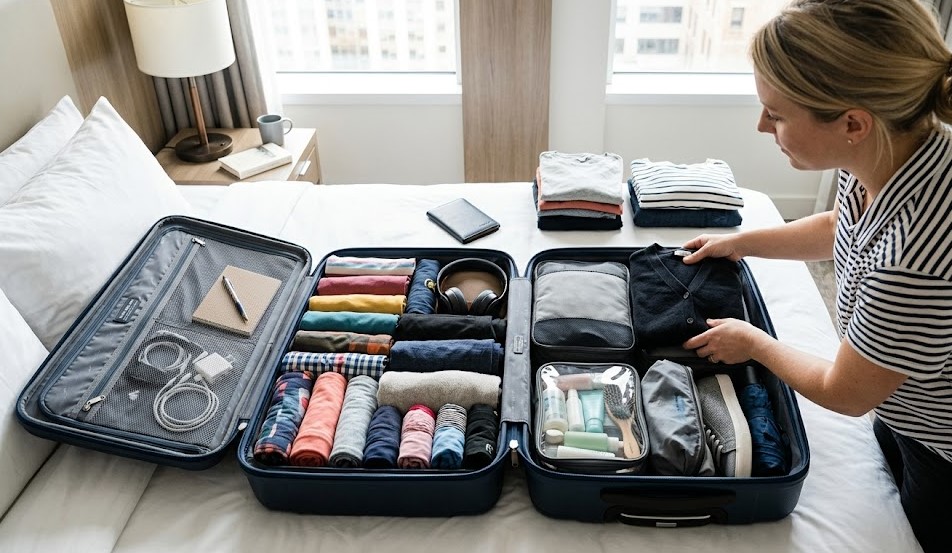
Choosing the correct luggage plays a major role in learning how to pack a suitcase efficiently because the size, structure, and design of your suitcase directly affect how much you can carry and how organized your belongings remain during travel. Frequent travelers often prefer lightweight hard-shell suitcases because they protect valuables better and provide structured compartments that prevent items from shifting during transit. Soft-shell luggage, on the other hand, offers more flexibility and expandable storage, which can help travelers fit extra clothing or souvenirs without carrying another bag. In 2026, many modern suitcases also include built-in USB charging ports, compression systems, and organized storage compartment that improve travel convenience. Travelers should choose carry-on luggage for shorter trips to avoid baggage claim delays and checked baggage fees, while larger suitcases work better for long vacations or family travel where extra clothing and essentials become necessary.
Roll vs Fold: Which Packing Method Works Best?
One of the most debated topics about how to pack a suitcase efficiently involves whether travelers should roll or fold their clothes. Many travel experts recommend using a combination of both methods because each technique serves a different purpose. Rolling clothes such as T-shirts, jeans, leggings, pajamas, and casual wear helps save space and prevents deep wrinkles while allowing travelers to fit more items into compact luggage. Folded packing works better for structured garments like blazers, dresses, button-up shirts, and formal outfits because it helps maintain shape and reduces creasing. Combining these methods creates a more balanced suitcase that stays organized throughout the trip. Travelers can also layer folded clothing at the bottom of the suitcase while placing rolled items in smaller gaps to maximize every inch of available space. This technique not only improves organization but also makes unpacking easier once travelers arrive at their destination.
Another advantage of rolling clothes is improved visibility inside the suitcase. Instead of stacking folded garments on top of one another, rolled items allow travelers to quickly identify clothing without disrupting the entire suitcase. This becomes especially useful during multi-city trips where constant unpacking and repacking are common. Some travelers even use military-style rolling methods to create tighter clothing bundles that save additional space. However, delicate fabrics like linen and silk should usually remain folded to avoid damage and wrinkles. Efficient travelers understand that the best packing strategy often depends on the clothing material, trip length, and suitcase size rather than relying on a single method for every situation.
Use Packing Cubes for Better Organization
Packing cubes have become one of the most recommended travel accessories for people learning how to pack a suitcase efficiently because they help organize clothing and travel essentials into separate compartments. Instead of digging through an entire suitcase to find one item, travelers can divide clothes by category, outfit type, or activity using individual cubes. For example, one cube can hold shirts, another can store undergarments, and a separate cube can contain gym wear or beach clothing. This system keeps luggage neat throughout the trip and saves time when unpacking in hotels or vacation rentals. Many modern travelers also use compression packing cubes, which reduce the amount of space bulky clothing takes inside the suitcase by removing excess air.
Another major benefit of packing cubes involves stress reduction during travel. Organized luggage allows travelers to quickly locate items during airport security checks, hotel stays, or transportation changes without creating unnecessary mess. Families especially benefit from this system because each person’s belongings can stay separated inside shared luggage. Packing cubes also help protect clean clothing from shoes, toiletries, and dirty laundry during longer trips. In 2026, travel experts continue recommending lightweight waterproof cubes because they provide both organization and protection while keeping suitcases compact and easy to manage.
Pack Travel Essentials the Smart Way
Packing travel essentials properly is an important part of understanding how to pack a suitcase efficiently because essential items should remain accessible without creating clutter inside the luggage. Important belongings such as passports, wallets, medications, chargers, headphones, travel documents, and toiletries should stay organized in dedicated compartments or small organizer bags. Many experienced travelers place these items near the top of the suitcase or inside personal carry-on bags for quick access during airport security checks and long flights. Keeping travel essentials organized prevents unnecessary stress and saves valuable time during transit, especially in crowded airports or unfamiliar destinations.
Travelers should also focus on minimizing toiletries by carrying travel-size products instead of full-size bottles. Leak-proof containers and transparent toiletry bags help prevent spills that could damage clothing or electronics inside the suitcase. Multi-purpose items such as moisturizer with sunscreen or combined shampoo and conditioner products can reduce the number of items travelers need to carry. Another useful strategy involves packing a small emergency kit containing basic medicines, power banks, snacks, and extra charging cables in case of delays or unexpected situations. Efficient travelers understand that smart organization of essential items can make a significant difference in maintaining comfort and convenience throughout the entire journey.
Save Space Without Overpacking
Saving space is one of the most important principles in mastering how to pack a suitcase efficiently, and it starts with learning how to prioritize what truly belongs in your luggage. Many travelers tend to overpack “just in case” items, but experienced packers know that this usually leads to heavy, disorganized suitcases. Instead, the key is to select versatile clothing pieces that can be reused in multiple outfit combinations. Choosing neutral colors and lightweight fabrics allows you to create several looks with fewer items, reducing unnecessary bulk while still keeping your travel wardrobe flexible.
Another effective space-saving method is using smart filling techniques. Empty spaces inside shoes can be filled with socks, belts, or small accessories, while gaps between clothes can hold lightweight items like undergarments or chargers. Layering items strategically inside the suitcase also helps compress space without damaging clothes. Some travelers even place heavier items like shoes and toiletry bags at the bottom near the wheels for better balance and compact packing. The goal is not just to fit everything in, but to ensure that every inch of the suitcase is used in a practical and organized way that avoids clutter and overpacking.
Common Packing Mistakes Travelers Should Avoid
Avoiding mistakes is just as important as learning how to pack a suitcase efficiently, because even experienced travelers often repeat habits that waste space and create unnecessary stress. One of the most common mistakes is overpacking items that are rarely used during a trip. Many people pack extra outfits, shoes, or accessories “just in case,” but in reality, most of these items remain untouched. This leads to heavier luggage, higher baggage fees, and less space for essentials or souvenirs. A more effective approach is to plan outfits in advance and stick to a realistic packing list based on the trip duration and activities.
Another frequent mistake is poor organization inside the suitcase. Throwing items randomly into luggage without grouping them by category makes it difficult to find things quickly, especially during travel. This often results in unpacking the entire suitcase just to locate a single item. Travelers also tend to ignore weight distribution, placing heavy items on top instead of near the wheels, which makes suitcases unstable and harder to move. Additionally, many forget to check airline baggage rules, leading to last-minute repacking at the airport. Avoiding these simple mistakes can significantly improve travel comfort and help maintain a clean, organized, and stress-free packing experience.
Conclusion
Mastering how to pack a suitcase efficiently is less about packing more and more about packing smart. When you plan your outfits in advance, choose the right suitcase, and use space-saving techniques like rolling clothes, packing cubes, and strategic layering, you instantly make your travel experience smoother and more organized. Efficient packing reduces stress at airports, helps you avoid unnecessary baggage fees, and ensures you always have what you need without carrying excess weight.
In the end, smart packing is a travel skill that improves with practice. The more you travel with intention and structure, the easier it becomes to identify what truly matters in your luggage. By avoiding common mistakes and focusing on simplicity, you can transform packing from a stressful task into a quick, effortless routine that supports better travel experiences every time.
FAQs
What is the most efficient way to pack a suitcase?
The most efficient way is to plan outfits in advance, roll soft clothes, fold structured items, and use packing cubes for organization.
Is it better to roll or fold clothes when packing?
Rolling saves space and reduces wrinkles for casual clothes, while folding is better for structured or delicate garments.
How do packing cubes help with suitcase organization?
Packing cubes separate clothes into categories, making it easier to find items and keeping the suitcase neat during travel.
What should you avoid when packing a suitcase?
Avoid overpacking, poor organization, ignoring airline baggage rules, and packing unnecessary “just in case” items.
Visit for More information : Multiple Magazines