 Admin

Nana Patekar was an acclaimed Indian actor and filmmaker whose powerful performances left a lasting impression on Hindi and Marathi cinema. Born Vishwanath Patekar, he built a remarkable career through intense dramatic roles, memorable comedy, and a deep connection with theatre. Films such as Parinda, Krantiveer, Ab Tak Chhappan, and Natsamrat showcased his ability to portray complicated characters with extraordinary conviction. Beyond acting, he explored filmmaking and became widely associated with humanitarian initiatives supporting struggling farmers and rural communities. His journey was shaped by determination, artistic discipline, and a willingness to choose challenging roles rather than follow conventional Bollywood trends. Nana Patekar died on October 8, 2026, at the age of 75, leaving behind a significant legacy in Indian entertainment and social work.
Quick Bio
| Detail | Information |
|---|---|
| Full Name | Vishwanath Patekar |
| Popular Name | Nana Patekar |
| Profession | Actor, filmmaker, writer, and theatre artist |
| Birth Date | January 1, 1951 |
| Birthplace | Murud-Janjira, Maharashtra, India |
| Nationality | Indian |
| Known For | Parinda, Krantiveer, Welcome, Ab Tak Chhappan, and Natsamrat |
| Education | Sir J. J. Institute of Applied Art, Mumbai |
| Spouse | Neelakanti Patekar |
| Children | Two sons, according to widely reported biographical accounts |
| Major Honour | Padma Shri, 2013 |
| Film Industry | Hindi and Marathi cinema |
| Humanitarian Work | Co-founder associated with the NAAM Foundation |
| Date of Death | October 8, 2026 |
| Age at Death | 75 years |
Who Was Nana Patekar?
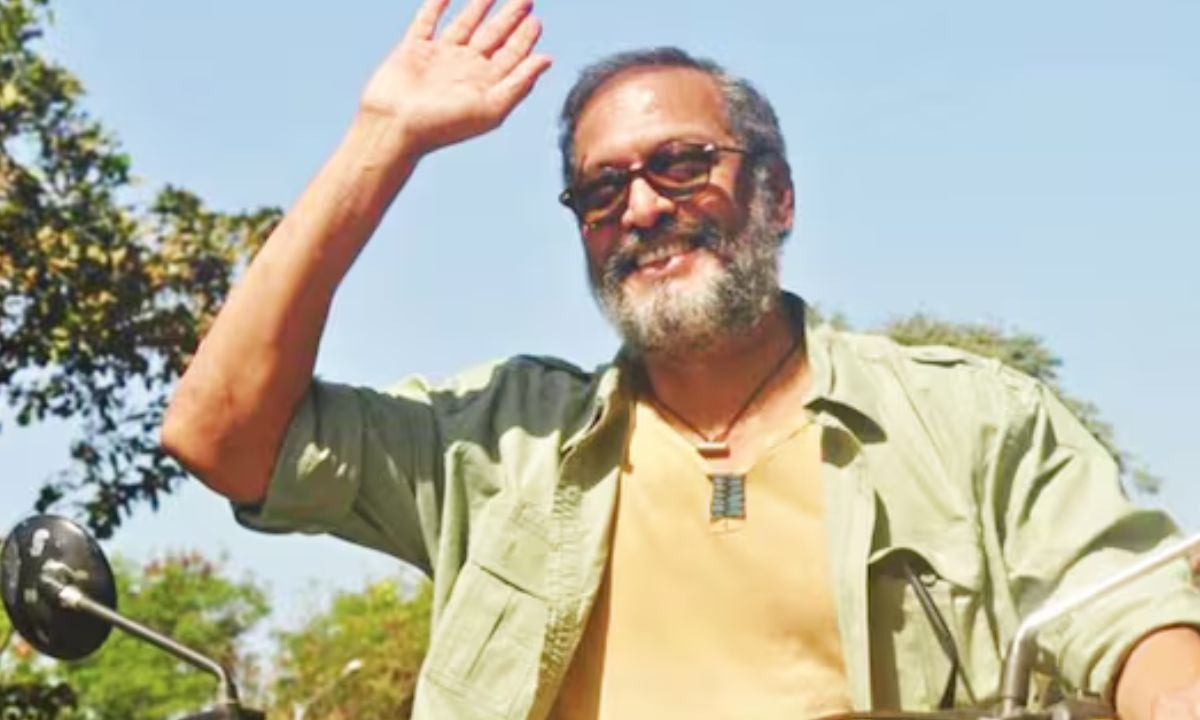
Nana Patekar was one of India’s most distinctive screen performers, known for bringing intensity, realism, and emotional complexity to his characters. He did not depend on the conventional image of a glamorous film hero. Instead, he developed a reputation for performances built around expressive dialogue, precise body language, and a commanding screen presence.
Born in Maharashtra, Patekar entered the entertainment industry through a combination of artistic training and theatre experience. His early roles helped him develop a style that worked particularly well in serious dramas and crime films. Over time, he became equally effective in commercial entertainers and emotionally demanding Marathi productions.
His career extended across nearly five decades. During that period, he worked with respected filmmakers, earned major national awards, and established himself as an actor who could portray villains, police officers, political figures, family men, and comic characters with equal conviction.
Nana Patekar also became known for his social initiatives, especially those supporting farmers affected by drought and financial hardship. This work gave his public identity a dimension beyond cinema and connected him with communities facing difficult circumstances.
Early Life and Family Background
Nana Patekar was born on January 1, 1951, in Murud-Janjira, Maharashtra. His birth name was Vishwanath Patekar, and he grew up in a Marathi-speaking family. His early years were influenced by financial difficulties, which he later discussed in interviews about his journey into the entertainment industry.
Before becoming an established actor, he studied at the Sir J. J. Institute of Applied Art in Mumbai. His artistic education exposed him to visual expression and creative thinking, although acting eventually became his primary profession.
His journey was not an overnight success story. Patekar worked to establish himself in an industry where leading roles and commercial opportunities were often concentrated around established stars. Theatre and early film appearances helped him develop the discipline and experience needed to take on more demanding parts.
These formative years contributed to his distinctive approach to performance. Rather than relying on superficial mannerisms, he became known for studying characters and expressing their personalities through voice, movement, and emotional intensity.
How Nana Patekar Started His Acting Career
Nana Patekar began his film career during the late 1970s. His Hindi film debut came with Gaman in 1978, a film directed by Muzaffar Ali that explored the lives of migrants and the difficulties of urban existence.
His early work included supporting roles in films that focused on social issues and serious human experiences. These projects gave him opportunities to develop his screen presence while working outside the conventional formula of mainstream romantic cinema.
Theatre also remained important to his artistic development. Stage acting requires performers to communicate emotion clearly and maintain an audience’s attention without the editing techniques available in films. The experience helped Patekar build his powerful voice, timing, and ability to convey complicated emotions.
During the 1980s, he appeared in several productions that gradually brought him greater recognition. His performance in Mira Nair’s Salaam Bombay! in 1988 introduced his work to a wider international audience. The film received major international recognition and was nominated for the Academy Award for Best Foreign Language Film.
These early experiences established the foundation for his later success. He became increasingly recognised as an actor who could strengthen a film through a carefully constructed supporting role.
The Breakthrough Success of Parinda
One of the most important milestones in Nana Patekar’s career came with Parinda, released in 1989. Directed by Vidhu Vinod Chopra, the crime drama explored the violent world of organised crime in Mumbai.
Patekar portrayed Anna, a dangerous and unpredictable gangster whose behaviour created an atmosphere of fear throughout the film. His performance stood out because he made the character intimidating without depending entirely on exaggerated gestures. Small changes in expression and sudden shifts in temperament helped establish Anna as a memorable screen villain.
The performance earned Patekar the National Film Award for Best Supporting Actor. It also brought him significant recognition through the Filmfare Awards.
Parinda helped establish his reputation as a performer capable of handling psychologically complex characters. Instead of being restricted to minor supporting roles, he became an actor directors could approach when a film required intensity and strong dramatic impact.
The movie remains an important part of his legacy because it demonstrated how a supporting character could become one of a film’s most unforgettable elements.
Nana Patekar’s Success With Krantiveer
In 1994, Nana Patekar delivered another career-defining performance in Krantiveer. Directed by Mehul Kumar, the film centred on corruption, injustice, and an individual’s response to social problems.
Patekar played Pratap Narayan Tilak, a troubled man whose anger develops into a forceful challenge against injustice. The role required him to combine frustration, moral conviction, vulnerability, and defiance.
His performance resonated with audiences because of its energetic dialogue delivery and socially charged themes. The film became one of the significant commercial successes of his career and strengthened his reputation as a leading actor.
For Krantiveer, Patekar received the National Film Award for Best Actor. The honour recognised his ability to carry a film through a demanding performance rather than relying only on conventional star appeal.
The success of the film also helped define his public image. Many viewers began associating him with characters who confronted corruption, questioned authority, and expressed the frustrations of ordinary people.
Memorable Films Across Different Genres
Nana Patekar’s filmography demonstrates considerable variety. He became famous for serious dramas, but his work also includes psychological thrillers, crime films, political stories, family dramas, and comedy.
Some of his most notable films include:
| Film | Year | Career Significance |
|---|---|---|
| Gaman | 1978 | His early Hindi film appearance |
| Salaam Bombay! | 1988 | Helped introduce him to wider international audiences |
| Parinda | 1989 | Earned him a National Film Award for Best Supporting Actor |
| Prahaar: The Final Attack | 1991 | Marked his directorial debut |
| Krantiveer | 1994 | Earned him a National Film Award for Best Actor |
| Agni Sakshi | 1996 | Demonstrated his strength in psychological drama |
| Khamoshi: The Musical | 1996 | Showcased his emotional range in a family drama |
| Ab Tak Chhappan | 2004 | Featured him as a police encounter specialist |
| Welcome | 2007 | Demonstrated his talent for comedy |
| Raajneeti | 2010 | Featured him in a political drama |
| Welcome Back | 2015 | Returned to the popular comedy franchise |
| Natsamrat | 2016 | Delivered a celebrated Marathi-language performance |
| Kaala | 2018 | Expanded his work into Tamil cinema |
These projects show that Patekar was not confined to one kind of character. His ability to shift between intense drama and comedy allowed him to reach different audiences throughout his career.
Nana Patekar’s Contribution to Marathi Cinema
Although Nana Patekar became widely recognised through Hindi cinema, Marathi theatre and films remained central to his artistic identity. His command of the Marathi language and experience with stage performance helped him interpret characters rooted in regional culture and literature.
One of his most celebrated Marathi performances came in Natsamrat, released in 2016. Based on the famous play by V. V. Shirwadkar, also known as Kusumagraj, the film follows Ganpat Ramchandra Belwalkar, a retired stage actor confronting changes in his family life and personal identity.
Patekar’s portrayal required him to express the emotional consequences of ageing, family relationships, lost status, and the difficulty of separating an actor’s public identity from private life. It was a role that drew heavily on his own experience as a performer.
The film received considerable attention and earned him the Filmfare Award for Best Actor in Marathi. His work demonstrated that he could deliver a powerful performance without depending on the conventions of mainstream Hindi cinema.
Natsamrat remains one of the strongest examples of his connection with Marathi literary and theatrical traditions.
Nana Patekar as a Director and Writer
Nana Patekar expanded his professional experience by working behind the camera. His directorial debut was Prahaar: The Final Attack, released in 1991. He also played the central role in the film.
The story follows a military-trained man who confronts crime and corruption after returning to civilian life. Its themes of discipline, responsibility, violence, and justice were consistent with the serious social questions that appeared in several of Patekar’s acting projects.
Directing allowed him to take responsibility for more than an individual performance. He had to consider how characters, scenes, and the wider story worked together to communicate a particular message.
Although he became much more widely known for acting than directing, this experience demonstrated his interest in the broader process of filmmaking. His career also included writing contributions, reflecting his involvement in different aspects of storytelling.
Awards and Major Achievements
Nana Patekar received some of the most respected honours in Indian cinema. His three National Film Awards recognised his work in both supporting and leading roles.
His major achievements include:
- National Film Award for Best Supporting Actor: For Parinda (1989).
- National Film Award for Best Actor: For Krantiveer (1994).
- National Film Award for Best Supporting Actor: For Agni Sakshi (1996).
- Padma Shri: Awarded in 2013 for his contribution to Indian arts and cinema.
- Filmfare Awards: Recognition for his performances in films including Parinda, Krantiveer, Angaar, and Apaharan.
- Filmfare Award for Best Actor in Marathi: Recognition for his performance in Natsamrat.
These honours reflect the breadth of his acting career. He could portray disturbing antagonists, troubled heroes, emotionally complex family figures, and comic characters without losing the distinctive qualities of his performance style.
His achievements also illustrate the importance of character actors and versatile performers in Indian cinema. A film’s impact often depends on the strength of its entire cast, and Patekar repeatedly demonstrated how a carefully developed character could become central to a movie’s success.
Humanitarian Work and the NAAM Foundation
Beyond cinema, Nana Patekar became closely associated with efforts to support farmers and rural communities in Maharashtra. Drought, water shortages, agricultural losses, and farmer suicides created serious challenges for many families, particularly in drought-prone regions.
In 2015, Patekar joined fellow Marathi actor Makarand Anaspure in establishing the NAAM Foundation. The initiative aimed to provide practical assistance to struggling farming communities and families affected by agricultural hardship.
The foundation’s activities have included financial support for affected households, water conservation projects, restoration of water resources, and initiatives intended to strengthen rural livelihoods.
These efforts addressed different aspects of rural hardship. Financial assistance could help families manage immediate difficulties, while improved water resources could contribute to more sustainable agricultural conditions over time.
Patekar’s involvement helped attract public attention to these issues. His professional visibility made it possible to raise awareness and encourage support for communities whose challenges might otherwise receive less attention outside their regions.
His humanitarian work became a substantial part of his public legacy. It demonstrated that his influence extended beyond films and included practical efforts to support people facing difficult circumstances.
Personal Life, Marriage, and Family

Nana Patekar married Neelakanti Patekar, and they had two sons, according to widely reported biographical accounts. However, he generally kept his family life away from the centre of his public career.
Public reports have described his marriage as estranged in later years. Details about private family arrangements should be approached carefully, as not every personal matter discussed in the media has been confirmed directly by the people involved.
His son Malhar Patekar has also been associated with the film industry. Nevertheless, Nana Patekar’s own professional identity remained focused mainly on acting, directing, theatre, and social work.
Unlike some celebrities who regularly publicise their family lives, Patekar was more commonly discussed in connection with his films, outspoken public statements, and charitable activities.
Public Image and Controversies
Nana Patekar developed a reputation for being direct and outspoken. His public statements often attracted attention because of his strong manner of speaking and willingness to express opinions about society, the film industry, and public responsibility.
His reputation was not without controversy. In 2018, actress Tanushree Dutta accused him of sexual harassment in connection with an incident on a film set. Patekar denied the allegation. The controversy became part of India’s wider #MeToo discussion and received extensive media attention.
A responsible account should distinguish the existence of an allegation from a proven finding. The episode was widely reported, but it should not be used to make unsupported claims about private motives or events beyond what reliable reporting established.
The controversy also illustrated the broader debate about workplace conduct and accountability in the entertainment industry. It formed one part of the public discussion surrounding Patekar, alongside his long film career and humanitarian activities.
Financial Life and Net Worth

Nana Patekar worked in the Indian entertainment industry for nearly five decades. His professional activities included film acting, directing, writing, and appearances in productions across different languages.
However, an exact, independently verified figure for his personal net worth is not reliably established in authoritative public sources. Figures circulated by celebrity websites should therefore be treated as estimates rather than confirmed financial information.
A person’s earnings from films also do not automatically reveal their total wealth. Personal expenses, taxes, investments, property, and other financial matters would need to be considered before an accurate estimate could be made.
His association with the NAAM Foundation should likewise be understood separately from his personal assets. Charitable donations and an organisation’s activities do not establish the donor’s exact net worth.
For these reasons, it is more accurate to acknowledge his long professional career without assigning him an unsupported financial figure.
Nana Patekar’s Final Years and Lasting Legacy
During the later years of his career, Nana Patekar remained associated with Indian cinema through selective film projects and continued to be remembered for his earlier performances. His work in Marathi cinema, in particular, demonstrated that he could still deliver deeply emotional roles long after becoming an established Hindi film star.
His career included a rare combination of serious dramatic performances and mainstream comedy. In Parinda, he created a frightening criminal character; in Krantiveer, he portrayed a man challenging injustice; and in Welcome, he entertained audiences as Uday Shetty, a gangster whose comic behaviour became one of the film’s defining features.
Patekar died on October 8, 2026, at the age of 75. Contemporary news reports stated that he died in Goa following a suspected cardiac arrest. His death prompted tributes recognising his contributions to cinema and his distinctive acting style.
His legacy also includes his association with humanitarian efforts for farmers and rural families. Through his involvement with the NAAM Foundation, he helped bring attention to drought-related hardship and the need for practical support in agricultural communities.
For audiences, his work remains a reminder that an actor’s influence can extend beyond conventional stardom. Through memorable characters, regional storytelling, filmmaking, and social initiatives, Nana Patekar established a place in Indian public life that reached far beyond the screen.
Conclusion
Nana Patekar’s life was defined by a remarkable career in Indian cinema, an unmistakable acting style, and an enduring connection with social causes. From his early film appearance in Gaman to acclaimed performances in Parinda, Krantiveer, and Natsamrat, he consistently demonstrated the value of emotionally honest and carefully developed characters.
His work as a filmmaker broadened his creative experience, while his humanitarian involvement with the NAAM Foundation connected his public life with the struggles of farmers and rural families. These contributions helped establish a legacy that went beyond awards and commercial success.
Although Nana Patekar died in October 2026, his performances continue to represent an important part of Hindi and Marathi cinema. His career serves as an example of how artistic individuality, professional discipline, and a commitment to social causes can combine to create a lasting public legacy.
FAQs
Who was Nana Patekar?
Nana Patekar was an Indian actor, filmmaker, writer, and theatre artist born on January 1, 1951. He became famous for his powerful performances in Hindi and Marathi films, including Parinda, Krantiveer, and Natsamrat.
What was Nana Patekar’s real name?
His real name was Vishwanath Patekar. He became popularly known as Nana Patekar throughout his career in Indian cinema.
What were Nana Patekar’s most famous movies?
His best-known films include Parinda, Krantiveer, Agni Sakshi, Khamoshi: The Musical, Ab Tak Chhappan, Welcome, Raajneeti, and Natsamrat. These productions demonstrate his range across drama, crime thrillers, comedy, and Marathi cinema.
How many National Film Awards did Nana Patekar win?
Nana Patekar won three National Film Awards for acting. He received awards for Parinda, Krantiveer, and Agni Sakshi.
Was Nana Patekar involved in charity work?
Yes. He was associated with the NAAM Foundation, which he helped establish with actor Makarand Anaspure in 2015. The organisation supports farmers and rural families through initiatives related to water conservation, financial assistance, and rural development.
Was Nana Patekar married, and did he have children?
Nana Patekar married Neelakanti Patekar and had two sons, according to widely reported biographical accounts. Public reports described the marriage as estranged in later years, while detailed private family information remained limited.
What was Nana Patekar’s net worth?
An exact, independently verified figure for Nana Patekar’s net worth was not reliably available in authoritative public sources. Online estimates should be treated cautiously because his private financial information was not comprehensively documented.
When did Nana Patekar die?
Nana Patekar died on October 8, 2026, at the age of 75, according to contemporary news reports. He died in Goa following a suspected cardiac arrest, leaving behind a substantial legacy in Indian cinema and humanitarian work.
Visit for More information : Multiple Magazines