
 Admin
Admin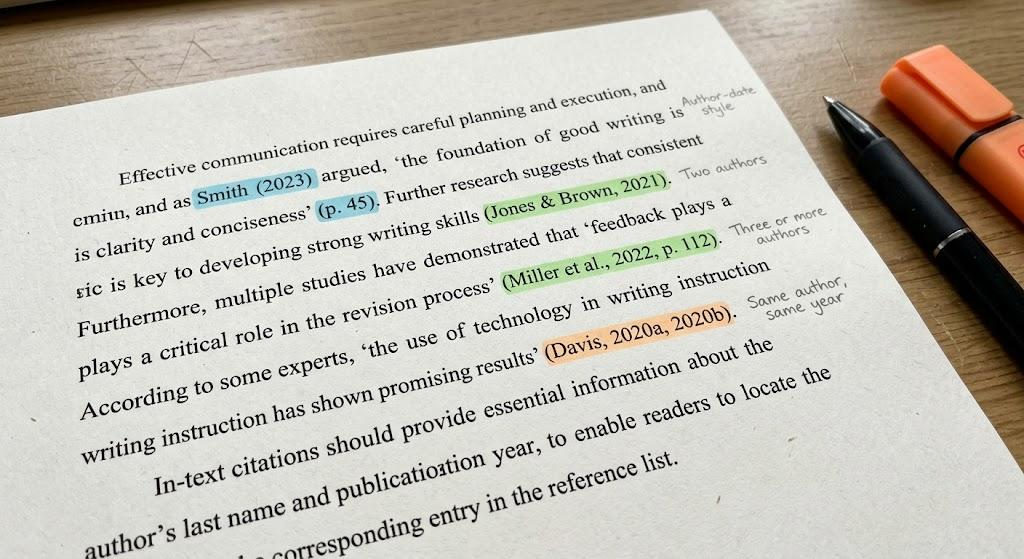
Understanding apa intext citation is essential for students, researchers, and academic writers because it maintains academic integrity in all forms of writing. In academic work, writers must properly credit every idea, fact, or quotation taken from another source within the text. APA in-text citation provides a simple and structured way to show where information comes from, allowing readers to quickly identify the original source without confusion.
In today’s academic environment, writers consider proper citation a basic requirement rather than an optional practice. Without correct apa intext citation, readers may view written content as incomplete or even classify it as plagiarism. This citation style is widely used in fields such as psychology, education, and social sciences because it ensures clarity, accuracy, and a direct link between in-text information and the reference list at the end of the document.
What Is APA Intext Citation?
APA intext citation works as a method used in academic writing to show the source of information directly within the body of a paper. It follows the guidelines of the American Psychological Association (APA) style and helps readers identify where ideas, facts, or quotations originally come from. This system gives credit to the original authors while maintaining clarity and structure in written work.
In most cases, writers include an apa intext citation with the author’s last name and the year of publication, placed within the sentence or at the end of it. For direct quotations, writers also add a page number to provide exact reference details. This format allows readers to easily connect in-text information with the full reference list at the end of the document, making academic writing more transparent and reliable.
Types of APA Intext Citation
APA intext citation comes in two main types: parenthetical citation and narrative citation. In parenthetical citations, the source information appears in brackets at the end of a sentence. This format usually includes the author’s last name and the year of publication, making it easy for readers to quickly identify the source without interrupting the flow of the sentence.
In narrative citations, writers include the author’s name as part of the sentence, followed by the year of publication in parentheses. This style helps integrate the source naturally into the writing while still giving proper credit. Writers use both types of apa intext citation widely in academic writing, and they choose between them based on how they want to structure the sentence and present information clearly.
Basic Rules of APA Intext Citation
The apa intext citation system follows a set of simple but important rules that ensure consistency and clarity in academic writing. One of the main rules is that every source cited in the text must also appear in the reference list at the end of the document. This creates a clear connection between in-text information and full source details, allowing readers to verify the material easily.
Another important rule covers proper formatting of author names and publication years. In most cases, writers place the author’s last name before the year of publication in parentheses. When writers quote directly from a source, they also include the page number. These rules of apa intext citation help maintain academic honesty, prevent plagiarism, and ensure that writers properly credit all borrowed ideas within the text.
APA Intext Citation Examples
The apa intext citation style becomes easier to understand when writers look at practical examples. In a simple paraphrased sentence, the citation appears as (Smith, 2020), which shows the author and year of the source. If writers include the author’s name in the sentence itself, they write it as Smith (2020), which allows the writing to flow more naturally while still giving proper credit.
For direct quotations, the format becomes slightly more detailed. It includes the page number along with the author and year, such as (Smith, 2020, p. 45). These examples of apa intext citation help readers clearly identify where information comes from and ensure that academic writing remains transparent, accurate, and properly referenced.
Common Mistakes to Avoid
Many writers make errors when using apa intext citation, especially when they are new to academic formatting. One common mistake involves forgetting to include citations for paraphrased information, not just direct quotes. Writers must credit every idea taken from another source properly, otherwise they risk unintentional plagiarism and reduce the credibility of their work.
Another frequent issue is inconsistent formatting, such as missing publication years, incorrect author names, or failing to match in-text citations with the reference list. Some writers also misuse punctuation or place citations in the wrong part of the sentence. Avoiding these mistakes in apa intext citation is important for maintaining accuracy, professionalism, and academic integrity throughout the document.
Importance of APA Intext Citation in Academic Writing
The apa intext citation system plays a vital role in academic writing because it ensures that all sources of information are properly credited. It strengthens the credibility of a paper by showing that the writer has conducted proper research and used reliable sources. This also helps readers trust the content, as they can easily trace where the information comes from.
Another important aspect of apa intext citation is that it helps prevent plagiarism by clearly distinguishing original ideas from borrowed content. It also improves the structure and professionalism of academic work, especially in fields like psychology, education, and social sciences. By using correct citation practices, writers maintain academic honesty and contribute to a more transparent and trustworthy research environment.
Conclusion
The apa intext citation system is an essential part of academic writing that helps maintain accuracy, credibility, and academic integrity. It allows writers to properly acknowledge sources while making their work more reliable and trustworthy. By using correct citation methods, students and researchers can clearly connect their ideas to original sources and avoid issues like plagiarism. Understanding how APA in-text citation works also improves writing quality and strengthens research presentation.
In summary, writers must master apa intext citation for academic or research writing. It ensures writers properly credit all borrowed ideas and follow professional academic standards in their work. When writers use it correctly, it makes research more organized, transparent, and easier for readers to verify.
FAQs
What is APA intext citation?
It is a method of crediting sources within the text using author name and year in APA style.
Why is APA intext citation important?
It helps avoid plagiarism and gives proper credit to original authors.
What information is included in APA intext citation?
Usually the author’s last name and publication year, and page number for quotes.
Where is APA intext citation used?
It is commonly used in academic fields like education, psychology, and social sciences.
Visit for More information : Multiple Magazines