
 Admin
Admin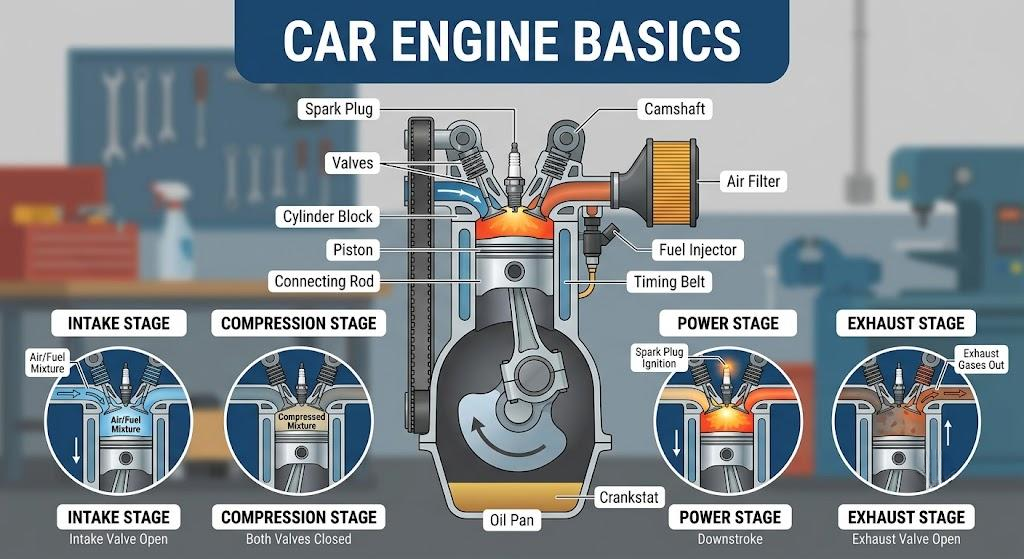
Understanding car engine basics is essential for anyone who owns or drives a vehicle because the engine works as the main system that powers the entire car. It converts fuel into mechanical energy through controlled combustion, which then drives the wheels and allows the vehicle to move. Without a properly working engine, a car cannot function at all, making it one of the most critical parts of automotive engineering.
Modern engines are designed to deliver a balance of power, fuel efficiency, and environmental performance. They use a precise combination of air intake, fuel injection, and ignition timing to generate energy smoothly. When you learn the car engine basics, it becomes easier to understand how vehicles perform, why maintenance is important, and how different engine systems work together to keep the car running efficiently.
What Is a Car Engine and Why It Matters
A car engine is a machine that converts fuel into mechanical energy to move a vehicle. It works through controlled combustion inside cylinders, where fuel mixes with air and ignites to create power. This power then transfers through various engine components to rotate the wheels. In simple terms, the engine acts as the heart of the vehicle, supplying the energy needed for every movement.
The importance of understanding car engine basics lies in knowing how essential the engine is for performance, safety, and efficiency. A well-functioning engine ensures smooth acceleration, better fuel economy, and reliable driving experience. It also helps drivers recognize early signs of problems, which can prevent costly repairs and breakdowns. Without a strong and efficient engine, even the most advanced vehicle cannot perform properly.
Main Components of a Car Engine Explained
A car engine contains several important parts that work together to generate power. Key components include cylinders, pistons, crankshaft, camshaft, valves, spark plugs, and fuel injectors. Each part plays a specific role in the combustion process. For example, cylinders hold the fuel-air mixture, while pistons move up and down to create mechanical force. The crankshaft converts this motion into rotational energy that ultimately powers the wheels.
Understanding these parts is a key part of car engine basics because it helps explain how energy moves through the engine system. The camshaft controls valve timing, ensuring air and fuel enter and exit at the correct moments, while spark plugs ignite the fuel mixture in petrol engines. Fuel injectors deliver the correct amount of fuel for efficient combustion. When all these components work together in harmony, the engine produces smooth and reliable performance.
How a Car Engine Works (4-Stroke Cycle)
A car engine works through a repeated process known as the 4-stroke cycle, which includes intake, compression, power, and exhaust stages. In the intake stroke, air and fuel enter the cylinder. During compression, the piston compresses the mixture to increase its energy potential. In the power stroke, the spark plug ignites the mixture, creating an explosion that pushes the piston downward and generates power. Finally, the exhaust stroke removes the burned gases from the cylinder to prepare for the next cycle.
This process is a core part of car engine basics because it explains how continuous motion is created from repeated combustion. The cycle happens thousands of times per minute in a running engine, producing the constant power needed to move the vehicle. Each stroke must occur at the right time, controlled by precise engine timing systems. When all four strokes work efficiently, the engine runs smoothly, delivers good performance, and maintains fuel efficiency.
Types of Car Engines in Modern Vehicles
Modern vehicles use different types of engines depending on performance needs, fuel efficiency goals, and design preferences. The most common types include inline engines, V-shaped engines, flat or boxer engines, and electric engines. Inline engines arrange cylinders in a straight line, making them simpler and more fuel-efficient. V engines place cylinders in a V shape, which allows more power in a compact design. Boxer engines position cylinders horizontally, which improves balance and stability.
Electric engines work differently because they do not use fuel combustion. Instead, they rely on batteries and electric motors to produce motion. Understanding these variations is an important part of car engine basics because it helps explain why different vehicles perform differently. Each engine type has its own strengths, such as power output, fuel efficiency, or smoothness, and manufacturers choose the design based on the purpose of the vehicle.
Fuel Combustion and Power Generation Process
The process of fuel combustion is the core of how an engine produces power. Inside the engine cylinders, fuel mixes with air in a controlled ratio. This mixture is then compressed by the piston and ignited by a spark plug in petrol engines or by high pressure in diesel engines. The combustion creates a rapid expansion of gases, which pushes the piston downward and generates mechanical energy. This energy is then transferred through the crankshaft to move the wheels.
Understanding this process is a key part of car engine basics because it explains how chemical energy turns into motion. Every small explosion inside the cylinder happens in a highly controlled and timed manner to ensure smooth performance. If combustion is not efficient, the engine may lose power, consume more fuel, or produce harmful emissions. Proper air-fuel balance and accurate timing play a major role in maintaining engine efficiency and overall vehicle performance.
Common Engine Problems and Warning Signs
Engines can develop issues over time due to wear, poor maintenance, or fuel-related problems. Common engine problems include overheating, oil leaks, misfiring cylinders, reduced power, and unusual noises. Overheating often occurs when the cooling system fails, while misfires usually happen due to faulty spark plugs or fuel delivery issues. Oil leaks can reduce lubrication and damage internal components if not addressed quickly.
Recognizing these problems is an important part of car engine basics because early detection helps prevent serious damage and costly repairs. Warning signs such as dashboard warning lights, smoke from the exhaust, rough idling, or poor fuel efficiency should never be ignored. When drivers understand these symptoms, they can take timely action and keep the engine running smoothly, ensuring better performance and longer engine life.
Maintenance Tips for Better Engine Performance
Proper maintenance plays a major role in keeping an engine efficient and long-lasting. Regular oil changes, air filter replacements, and timely inspection of engine components help maintain smooth performance. Engine oil lubricates moving parts and reduces friction, while clean air filters ensure proper airflow for efficient combustion. Cooling system checks also prevent overheating and protect the engine from long-term damage.
Following basic car engine basics maintenance practices helps improve fuel efficiency and reduces the risk of unexpected breakdowns. Drivers should also pay attention to warning lights, unusual noises, or changes in performance, as these often indicate early engine issues. Routine servicing at recommended intervals ensures that all components function properly, helping the engine deliver consistent power and reliability over time.
Conclusion
Understanding car engine basics helps drivers gain clear insight into how a vehicle produces power and operates efficiently. The engine converts fuel into mechanical energy through a precise combustion process, involving key components such as pistons, cylinders, crankshafts, and spark plugs. Each system works together in a continuous cycle to ensure smooth performance, fuel efficiency, and reliable driving. Learning these fundamentals makes it easier to recognize how important proper maintenance and timely repairs are for long-term engine health.
A well-maintained engine delivers better performance, improved fuel economy, and fewer breakdowns. By understanding how engines function, drivers can make smarter decisions about servicing and care, which ultimately extends the life of the vehicle. The car engine basics also highlight the importance of monitoring warning signs and following regular maintenance routines to avoid costly repairs and ensure safe driving experiences.
FAQs
What are car engine basics?
Car engine basics explain how an engine works by converting fuel into energy through combustion and mechanical movement.
What is the main function of a car engine?
The main function is to produce power that moves the vehicle by burning fuel inside the cylinders.
What are the main parts of a car engine?
Key parts include cylinders, pistons, crankshaft, camshaft, valves, spark plugs, and fuel injectors.
How can I keep my car engine in good condition?
Regular oil changes, timely servicing, and checking for warning signs help maintain engine health and performance.
Visit for More information : Multiple Magazines